- How Noise Arrives and Is Displayed
- Quiesence
- The Southern Zone: Geyser Hill and Old Faithful
- Old Faithful Geyser
- Giantess Geyser
- Beehive Geyser
- Concerted Eruptions of Old Faithful and Beehive
- Lion Geyser
- Doublet Pool
- The Castle-Grand-Sawmill Zone
- Castle
- Real and False Pauses of Castle Geyser
- Grand
- Grand Checker - What is a pause and what's not?
- Sawmill Complex
- Giant Geyser and Mastiff Geyser
- Oblong Geyser
- False Geysers - Noises That Are Not Eruptions
- Airplanes
- Trucks and Heavy Equipment and ????
YGH Monitor App - Pt. 3: Use Cases
A living document showcasing examples of verified eruptions and their YGH traces
Published on: Thursday, 12 November 2026 at 00:55 UTC
YGH Monitor App - Pt. 2: How to Use the Tools
Instructions on how to navigate and use the YGH Monitor App for various forms of geyser gazing.
Published on: Saturday, 07 November 2026 at 00:55 UTC
YGH Monitor App - Pt. 1: Introduction
A new instrument in Yellowstone can be used for geyser gazing
Published on: Saturday, 07 November 2026 at 00:55 UTC
Sofirn's HS22 and SP40A Headlamps
For cavers, this is like having a sub-$150 Scurion
Published on: Wednesday, 17 December 2025 at 11:55 UTC
The Thermals Features of Yellowstone
Just over 3,000 words you didn't know you wanted to read.
Published on: Tuesday, 07 October 2025 at 11:55 UTC
Trip Report: Bighorn-Horsethief Cave System
Surveying and photography during the August 2025 project weekend.
Published on: Wednesday, 01 October 2025 at 11:55 UTC
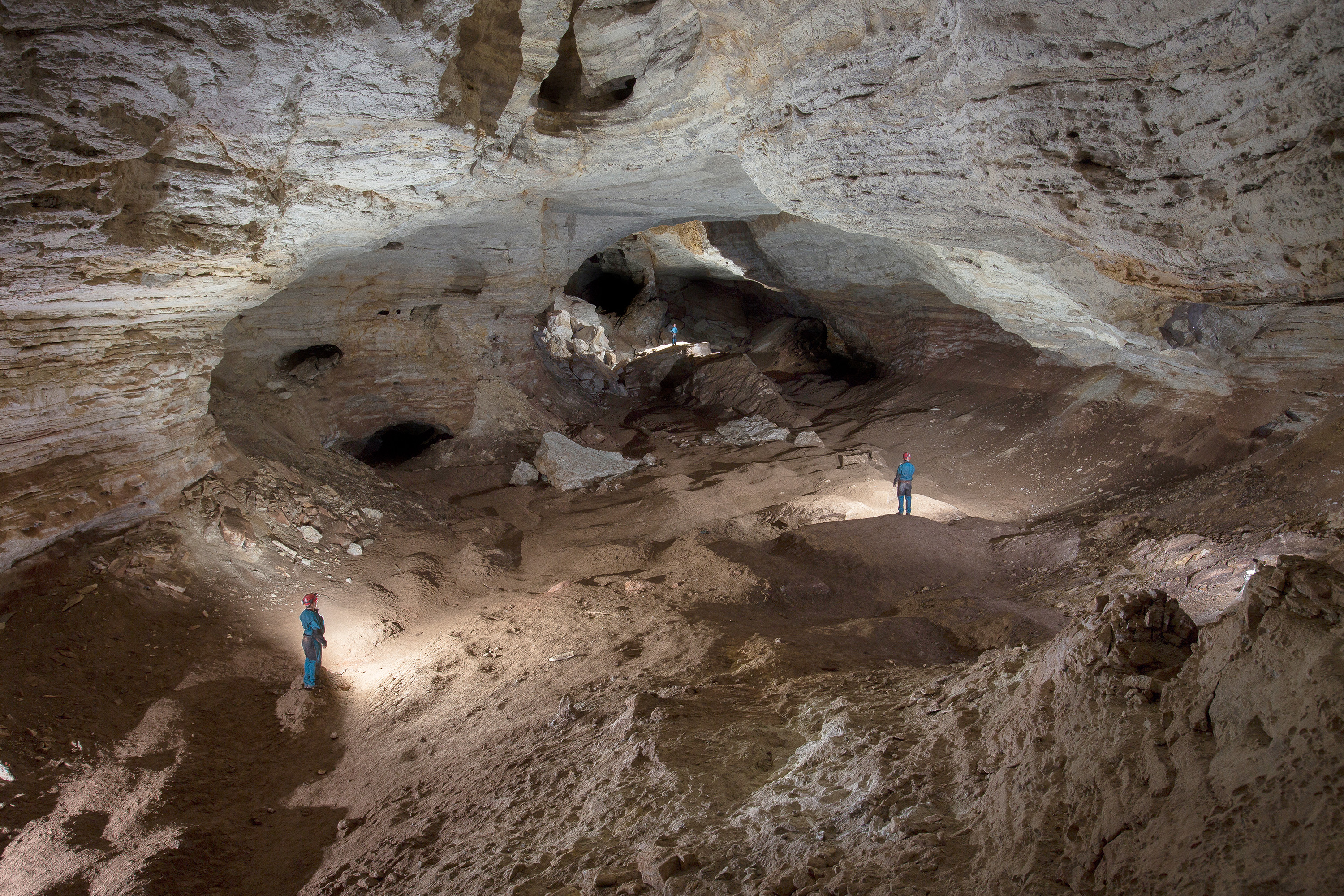
Bighorn-Horsethief Cave System
An introduction to the longest known cave in Wyoming and Montana
Published on: Tuesday, 23 September 2025 at 11:55 UTC
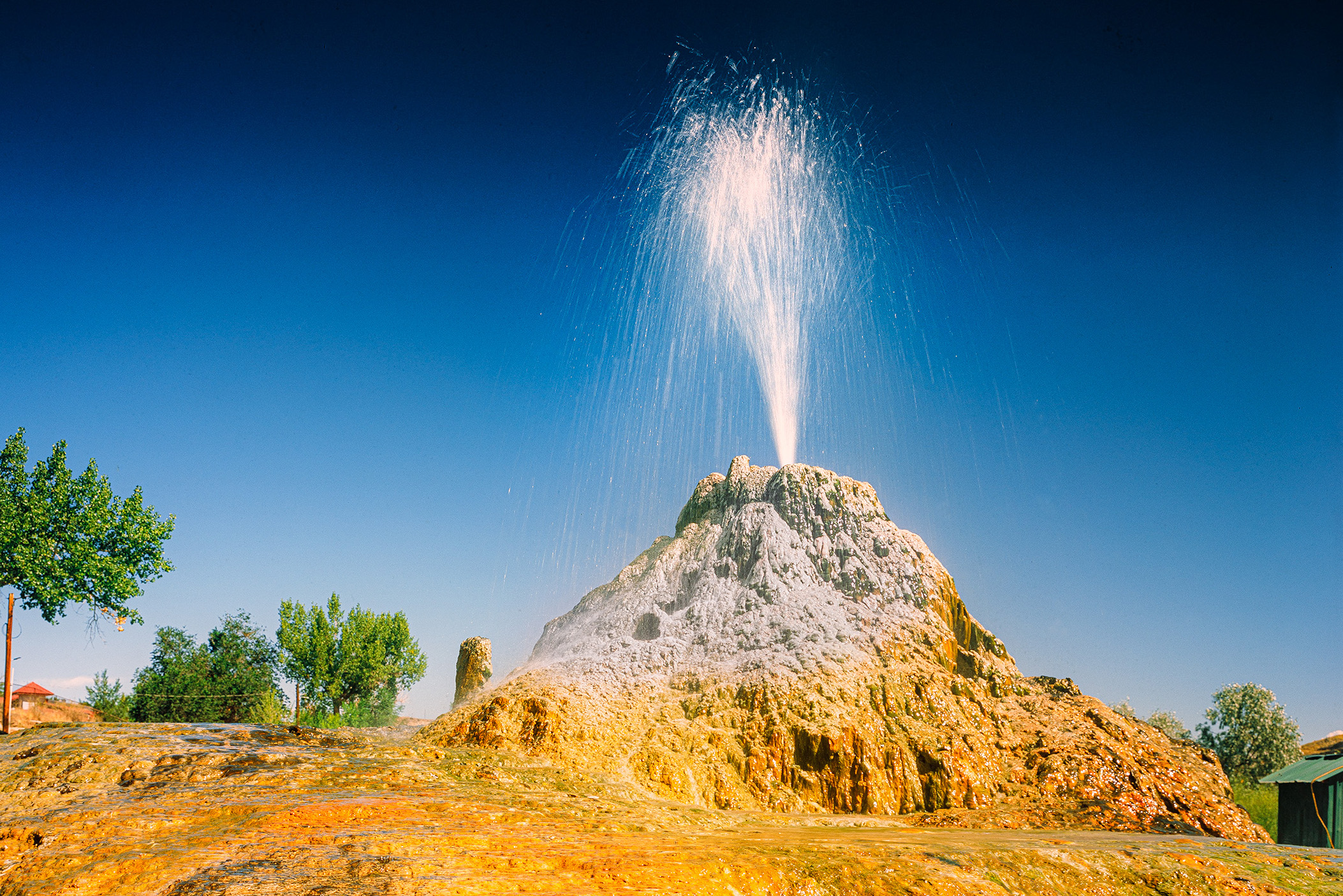
Thermopolis, WY, August 2025
Large travertine hot springs in central Wyoming
Published on: Friday, 19 September 2025 at 11:55 UTC
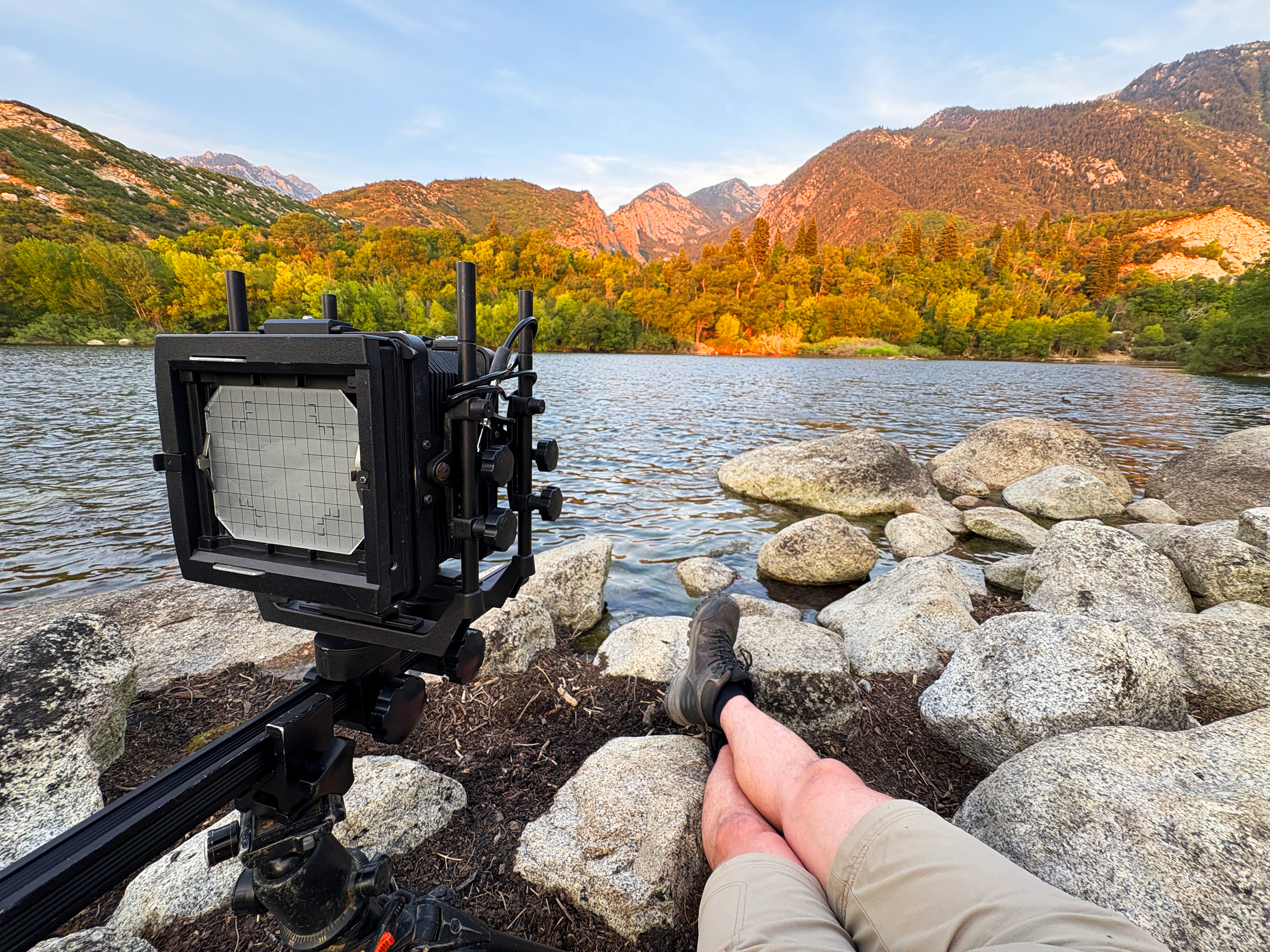
Lazy Photography in the Wasatch Range
Easy hiking and drive up sunsets from suburban Salt Lake City
Published on: Thursday, 11 September 2025 at 12:26 UTC
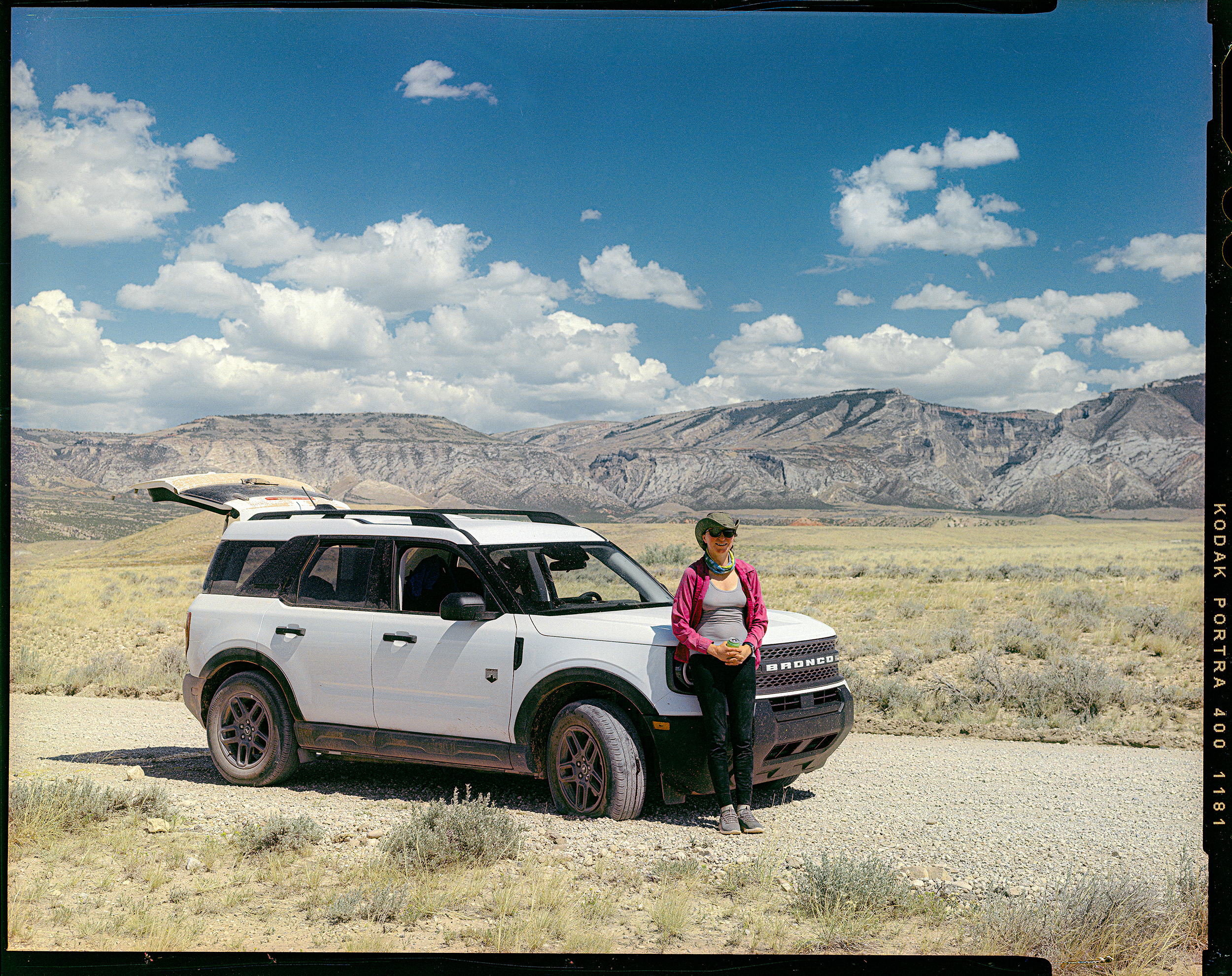
Car Review: 2026 Ford Bronco Sport
1500 miles of driving and camping with the 2026 Ford Bronco Sport
Published on: Wednesday, 10 September 2025 at 11:55 UTC
Wyoming, August 2025
Logistics and gear for eleven days of caving and photography in Big Sky Country
Published on: Wednesday, 10 September 2025 at 11:55 UTC
.jpg)
Tonto Natural Bridge
Massive travertine formation in central Arizona
Published on: Wednesday, 29 November 2023 at 11:55 UTC

Building This Website
Part 1: Lessons learned in mentally herding cats.
Published on: Friday, 14 July 2023 at 19:48 UTC
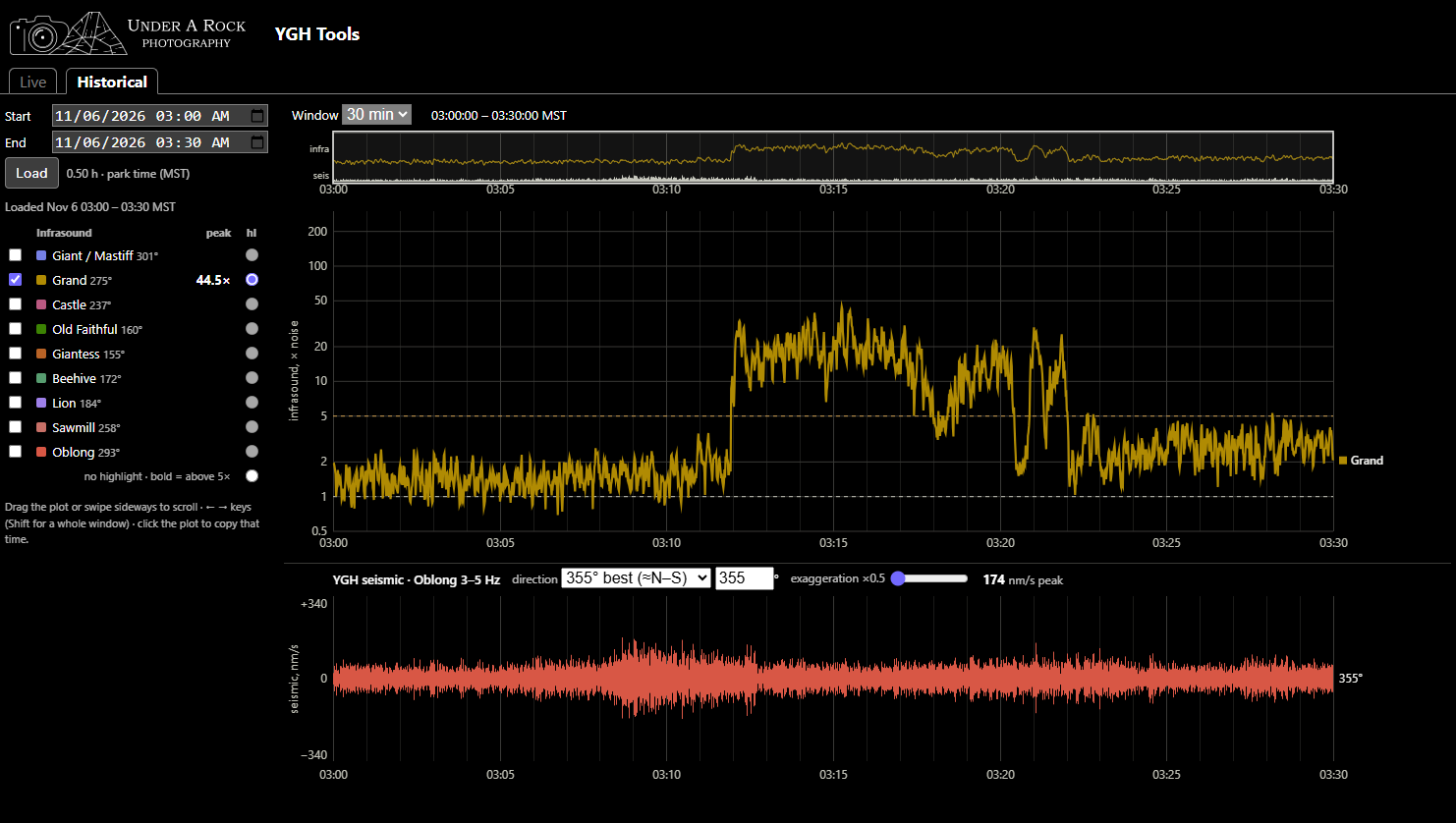
Infrasound and seismic traces for an eruption of Oblong at 0308 and a 2 burst eruption of Grand at 0311 on 6 November 2026.
YGH Monitor App - Pt. 3: Use Cases
A living document showcasing examples of verified eruptions and their YGH traces
Published: Thursday, 12 November 2026 at 00:55 UTC
Contents:
Note: This blog post documents how data from a new sensor is being processed by this specific tool and then interpreted by volunteers with no official training in the geosciences. Interpretations and conclusions here are likely to change over time as more observational data is collected.
How Noise Arrives and Is Displayed
Let's dive a bit more into how noise arrives at YGH and how it's processed. Seven geysers show up reliably in YGH’s infrasound or seismic data: Old Faithful, Beehive, Lion, Castle, Grand, Giant (with its neighbor Mastiff) and Oblong. Here’s what each one looks like in the traces.
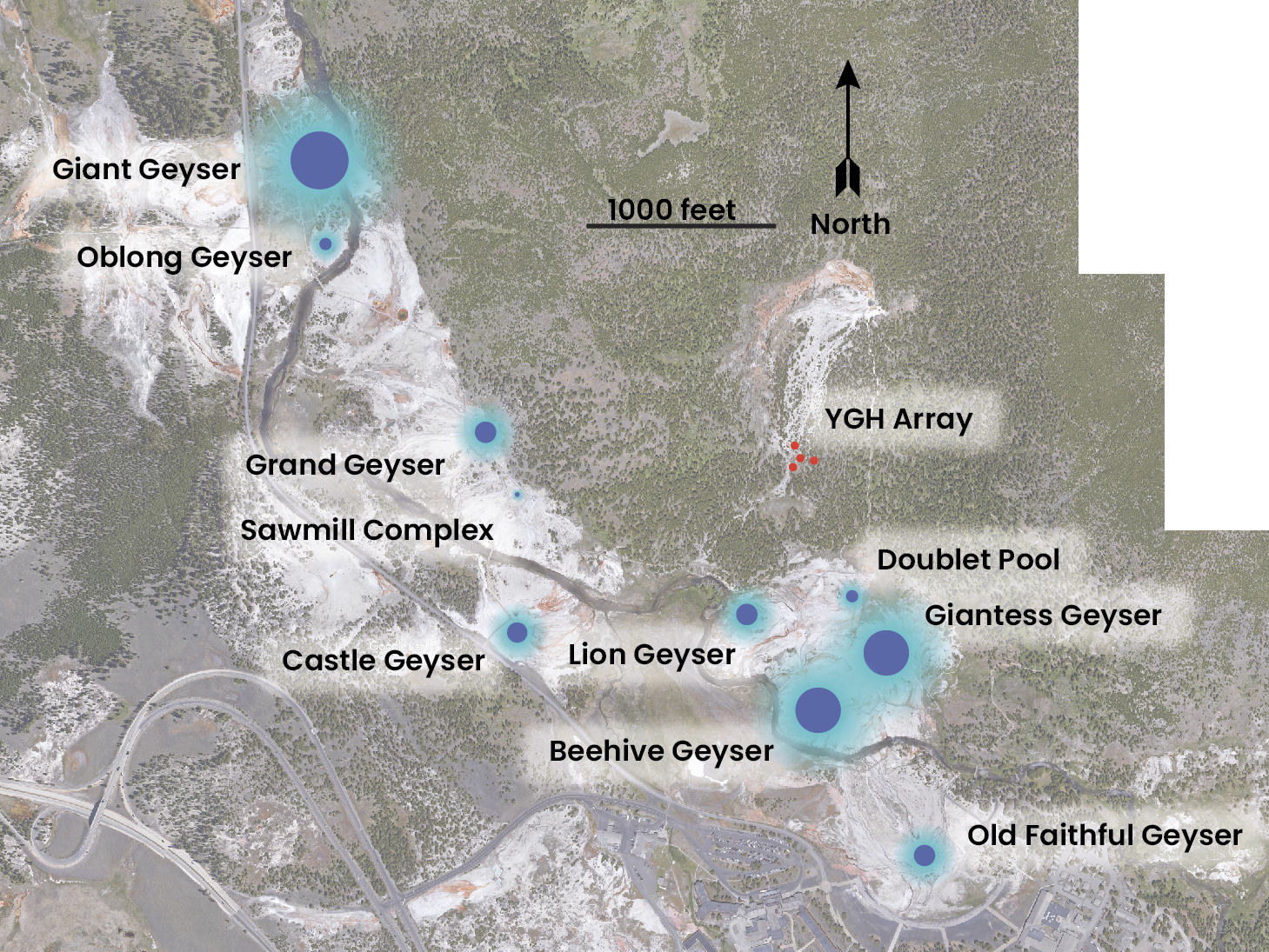
Location of the YGH array in the Upper Geyser Basin and the seven 'loud' geysers which can be heard (or felt) by it using satellite imagery. The relative size of the blue dots and shade indicate each feature's relative loudness. The smallest dots can only be heard under very quiet conditions, or via the seismic sensors.
In an ideal world the sound from these features would be a perfect wave of consistent frequency and arrive undistorted and with no overlap. None of those cases are true. The infrasound emitted by geysers is a mixture of frequencies ranging from less than 1Hz up to 20Hz. For a visual comparison, a sound wave of 6Hz has a wavelength of about 50 meters, this is about the same as the wavelength of the typical ocean wave breaking on a shoreline. Imagine an ocean wave moving at you at ~650 miles per hour! With waves of that length its difficult for the sensor array to determine exactly what direction the sound originates from. Given the size of the sensor array noises kind of arrive from a vague direction and so multiple features can all kind of sound like they come from the same general spot. For YGH there seems to be three primary zones from which noise arrives: Geyser Hill to the south, Grand and Castle to the West, and Giant to the northwest.
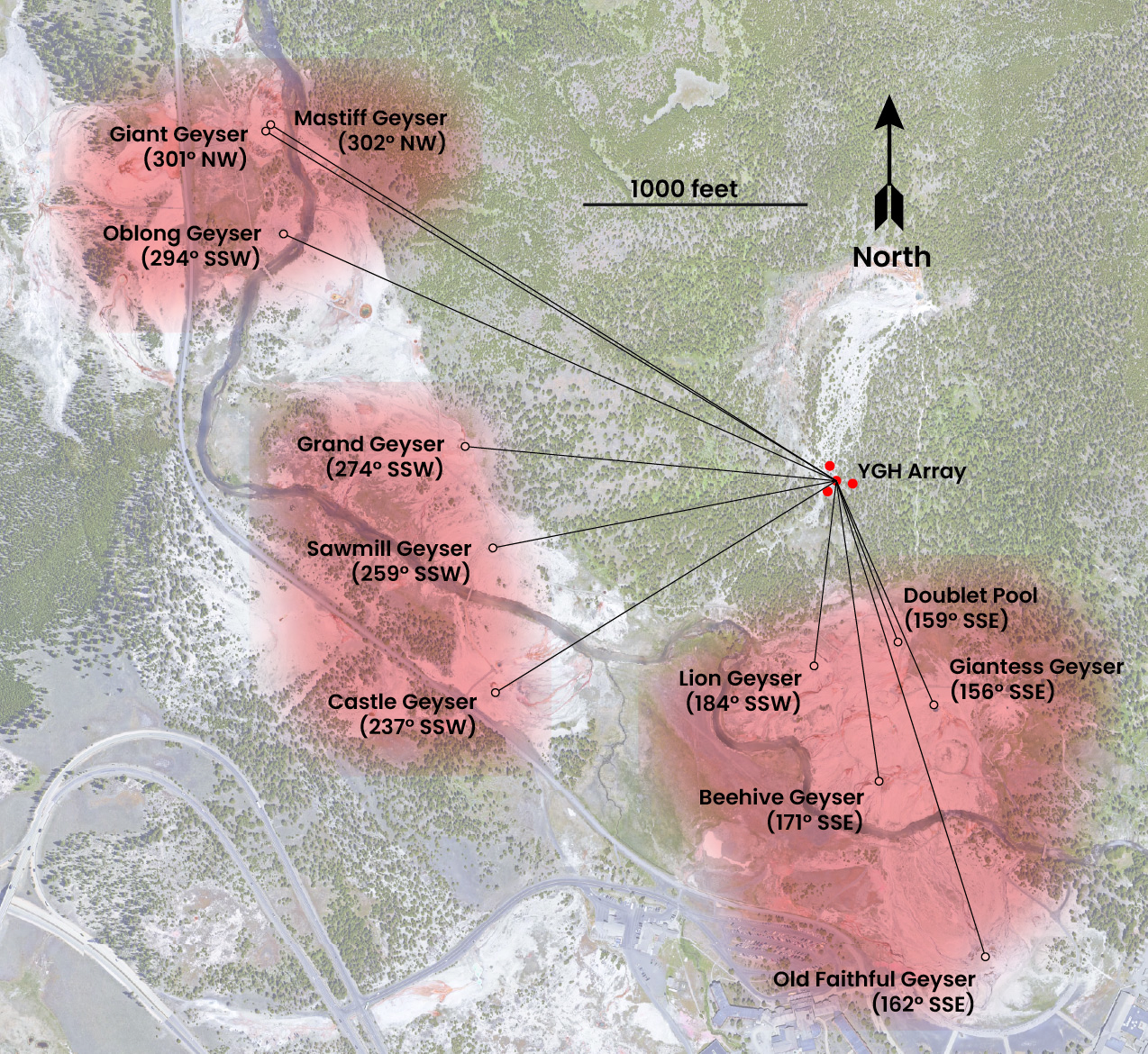
Location of the YGH array in the Upper Geyser Basin and the seven 'loud' geysers which can be heard (or felt) by it using satellite imagery. The red zones indicate the three main regions that sound emanates from and hits the sensor.
The final result of this setup is that noise calculated to be coming from Old Faithful will also show up on the noise coming from Lion, Beehive, and Giantess. The YGH Monitor calculates the noise level above background levels, and so when background levels are really quiet the noise can still be kind of separated. Noise from Old Faithful may show up on the plots for Giantess, Lion, and Beehive, but it will be loudest for Old Faithful. Under windy and noisy conditions this gets muddied and harder to separate.
Sound complicated? I guess it is, to a degree.
(How's that for a double pun?)
On a geyser-by-geyser basis its actually not that hard and we will look at each one in the following sections.
Quiesence
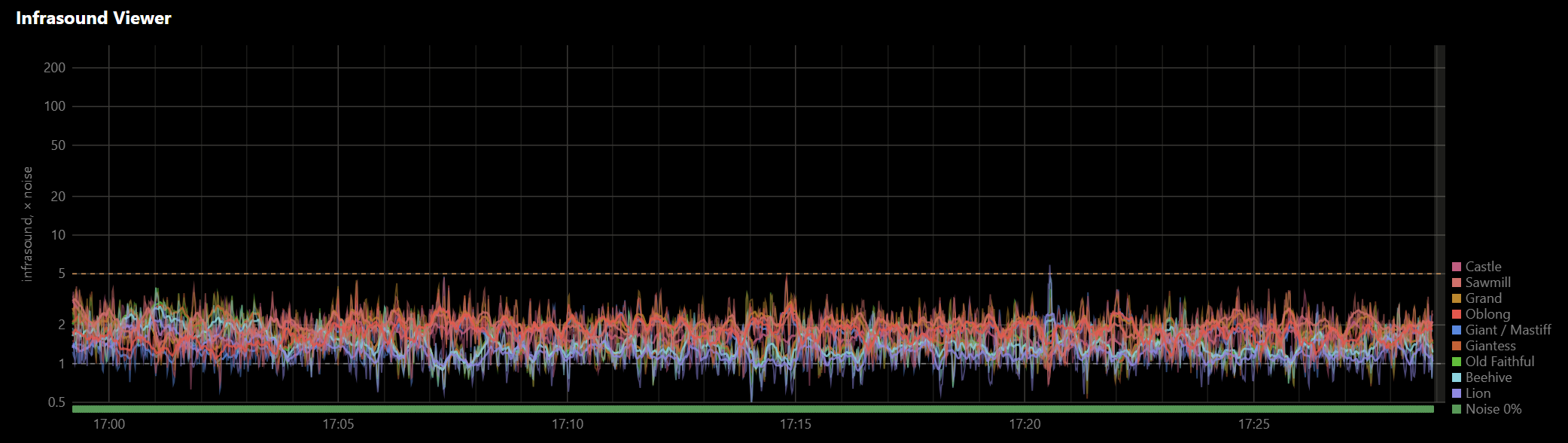
Thirty minutes of silence around 17:00 on 12 November 2026. The background noise levels are at 0%, and noise from all features show up as a tangled mess bouncing between at or just slightly above background noise.
The figure above is what quiet looks like in the southern Upper Geyser Basin. At 17:15 on Thursday, 12 November 2026, nothing was making any noise. The park was closed, there was no vehicle traffic, no air traffic, no wind, and no geyser erupting. Only the Firehole River would have been making noise.
The Southern Zone: Geyser Hill and Old Faithful
All of the features here have their sounds overlap with each other. Determining which feature is erupting needs timing and context clues.
Old Faithful Geyser
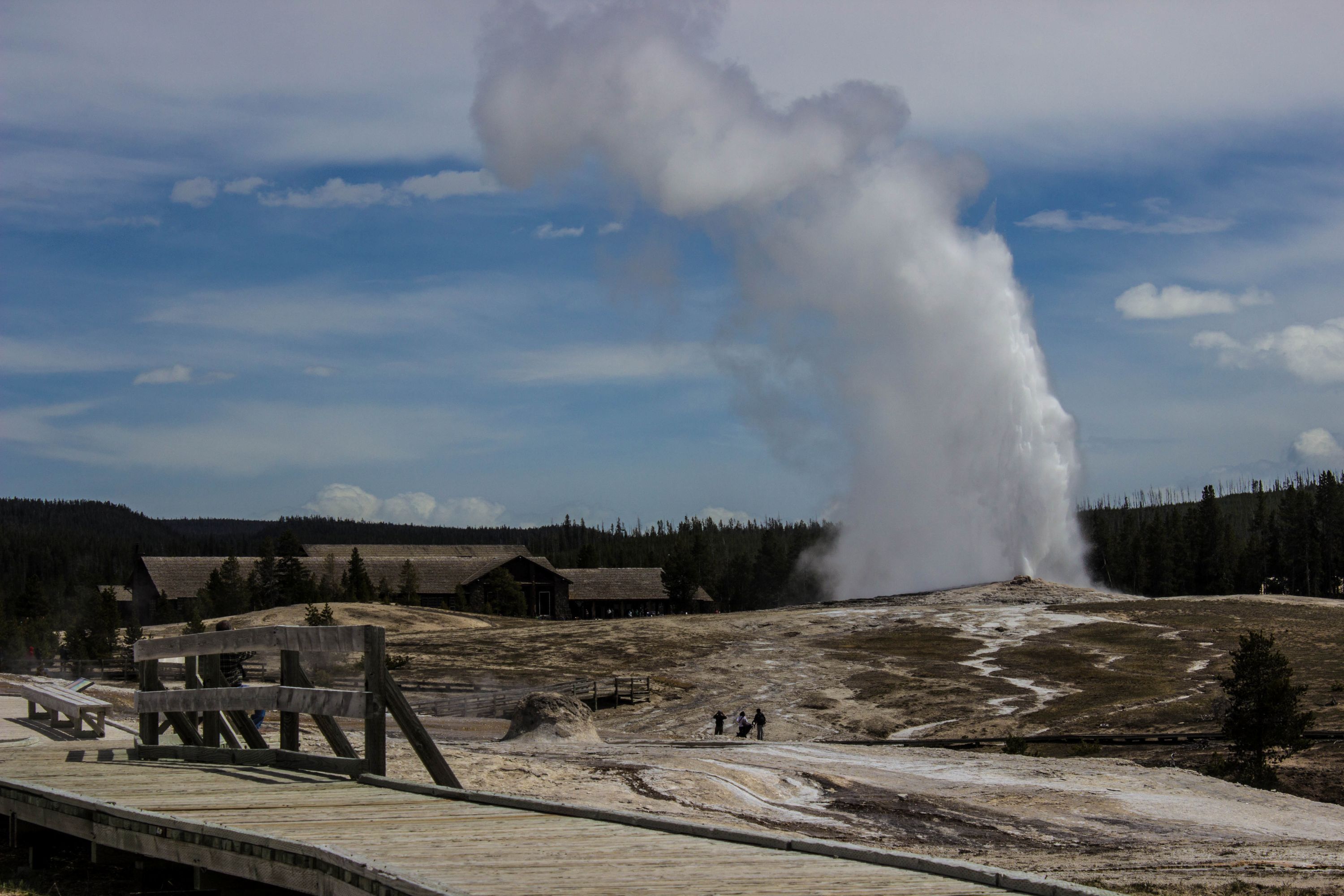
Old Faithful Geyser at peak eruption as seen from Geyser Hill in the same direction that YGH would 'see' it.
Old Faithful is about 2,300 feet south-southeast of the array. Its eruptions leave a consistent pattern: the sound rises sharply for about 30 seconds, then slowly fades. That matches the eruption itself, which climbs to full height and strength in its first 20 to 30 seconds before slowly winding down. Once the column drops below about 20 or 30 feet, the sound fades into the background.
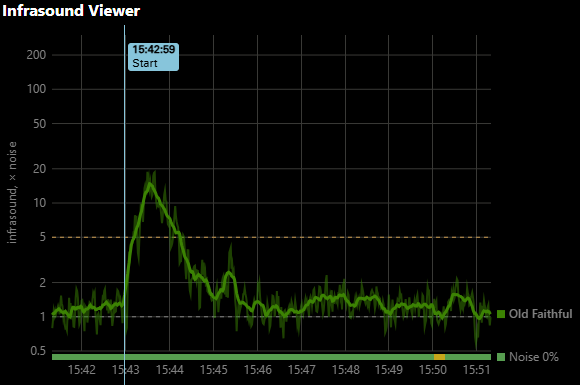
Old Faithful acoustic infrasound trace from a very calm and quiet day with the start labelled at 15:42:59. This eruption was also observed on the webcam as start at 15:42:58.
Old Faithful has two general types of eruptions: long and short. In both cases the eruption starts identically, climbs to its full height, and then begins dropping after about 30 seconds. The behavior after the drop is what differentiates them. In a short mode eruption the column keeps dropping back into the vent and the geyser simply stops erupting. In a long mode eruption the column drops to about 20-30 feet in height and holds there for another 2-3 minutes before gradually changing into a weak steamphase. .
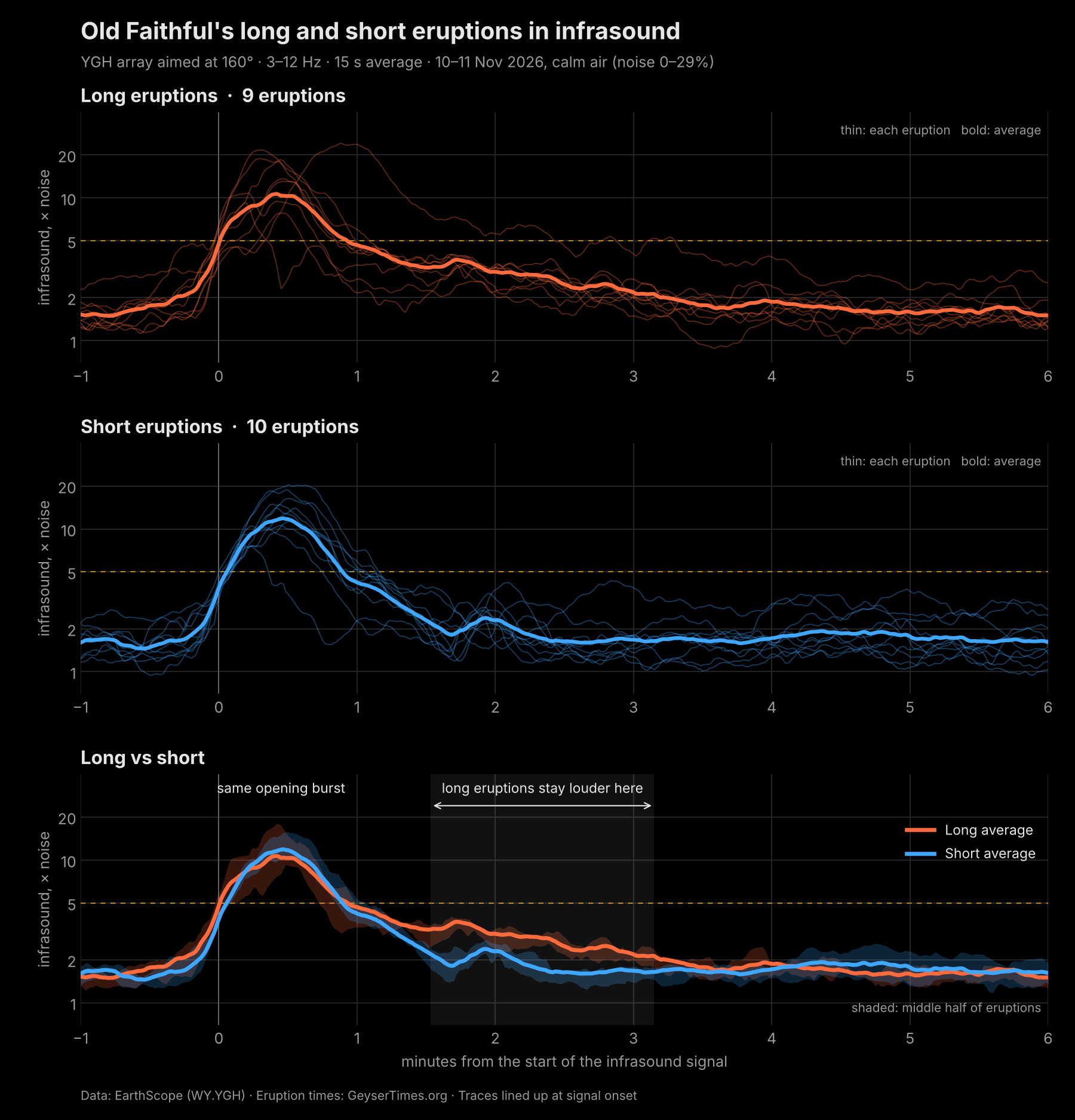
Infrasound traces of Old Faithful's long and short mode eruptions.
The tail off of the long mode eruptions does generate infrasound, but it is generally quite low and only evident on very quiet days when no other feature is making any noise. Currently, there is no way to reliably differentiate long and short mode eruptions using the YGH Monitor.
Cases Where You Can't See Old Faithful
Old Faithful is one of the quieter features in the Upper Geyser Basin, especially for it's size. It can be muffled almost completely by wind or when other features erupt. Here is an example of where Old Faithful has been distorted or muffled that covers many similar situations.
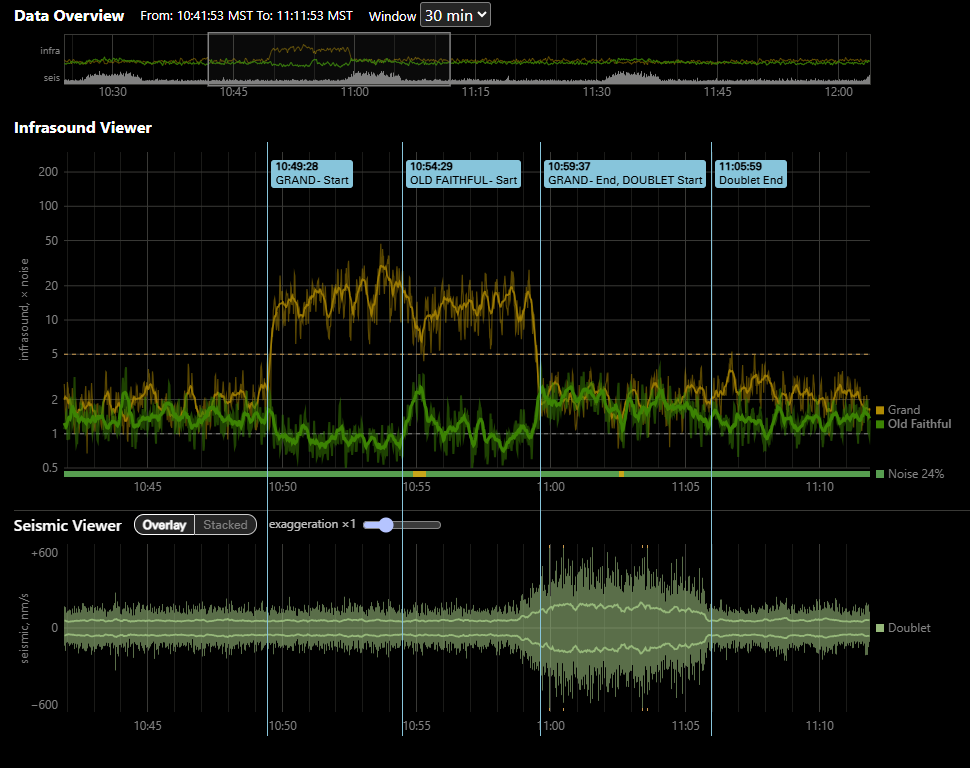
Infrasound trace of Old Faithful Geyser erupting on 11 November 2026 at 10:54 during the eruption of Grand Geyser which started at 10:49. Both of these eruptions were verified by the webcam.
In the above example Old Faithful erupted during an already very noisy period (in this case, during an eruption of Grand Geyser, a much louder geyser!). It's infrasound trace was muffled somewhat and only rose to just over 2 times background noise. So much noise was hitting the sensors from various directions that the noise level breifly became yellow - indicating that signals may get distorted. In this case the webcam was able to confirm Old Faithful was erupting - but what if it was dark and we couldn't verify it? This is where context clues come into play.
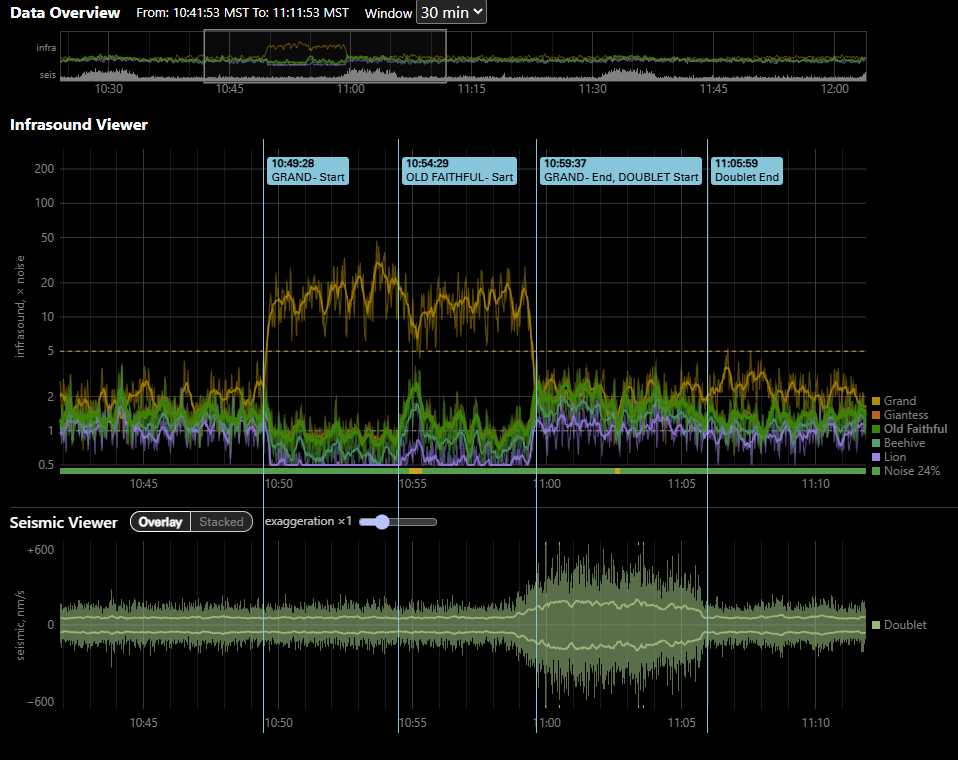
Infrasound trace of Old Faithful Geyser erupting on 11 November 2026 at 10:54 during the eruption of Grand Geyser which started at 10:49. Now the infrasound traces for Lion, Beehive, and Giantess have been turned on.
Now we've turned on all of the infrasound traces looking south from YGH towards Geyser Hill. What we see is that the infrasound was also recorded coming from Beehive and Lion. It's important to note here that the loudest noise is coming from the Old Faithful direction, and the spikes happen at the same time. If this was a plane (which makes a similar noise trace) we would see the spikes be at different times in different directions.
But could it be a truck, or some other loud noise from the Old Faithful visitor area? Possibly! Not impossible! But there is one more critical context clue: the last Old Faithful was at 09:50 and was a short mode eruption, Old Faithful was expected to erupt at this time!
Cases FOR an eruption of Old Faithful:
- Old Faithful was expected at this time.
- Trace has the same shape and duration as an eruption of Old Faithful.
- Sound comes from the south in all directions at the same time, so its not a moving object.
- Sound is loudest when pointing at Old Faithful.
- A very loud truck, distant thunder, or a plane could make this noise
Giantess Geyser
Giantess has not erupted since the installation of YGH. We don't know what it will look like on infrasound, but it should be loud and energetic enough to be on both the infrasound and seismic data streams. Giantess begins with a series of violent thumping (like Doublet, but with a piledriver instead of a hammer) before starting a very loud eruption. Previous eruptions have been recorded on the existing seismometers near Old Faithful. Here is hoping we find out soon enough!
Beehive Geyser

Beehive's powerful eruptions are driven by steam under immense pressure, generating an exceptionally loud reverberating roar.
Beehive is closer, about 1,600 feet away and nearly due south, and it’s very loud. Its sound shows up in the data traces coming from Lion, Giantess, and Old Faithful. In general, the magnitude of the noise is much higher. Beehive is unusual in that its strongest noises come in the middle and toward the end of its eruptions. Its rocket-like jet starts out heavy with water, then shifts partway through its four to five minute eruption into a steamy spray. That transition brings powerful bursts of pressurized steam, and a chest-pounding, bass-heavy roar you can feel as much as hear. The infrasound sensors get hit hard by it.
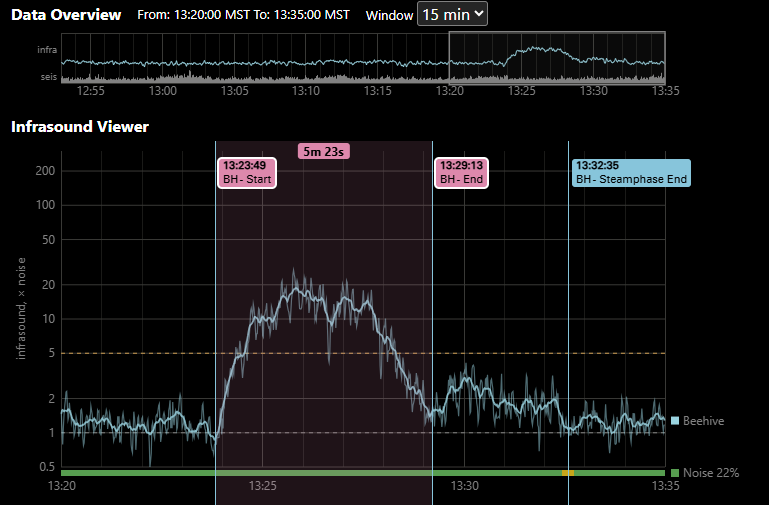
Acoustic trace for Beehive Geyser when 'aimed' at Beehive. Note the initial starting spike and the gradual increase and then decrease in volume. This matches observed patterns of eruption intensity. Surprisingly, Beehive's seemingly weak steamphases appear to be present in the infrasound data for a few minutes after each eruption. These steamphases are nearly silent in person, but must give off some level of infrasound as this pattern has been observed repeatedly following Beehive.
Concerted Eruptions of Old Faithful and Beehive
Occaisonally Old Faithful and Beehive erupt at the same time and their sounds overlap. We've yet to record an instance of a true simultaneous start, but we do have two instances where Beehive started near the end of Old Faithful's acoustic trace producing a distinct double-peak. What is the tell-tale sign here is that when Old Faithful erupts it's noise is higher, then when Beehive erupts it's noise becomes the louder one. You can see the switch happen on the traces.
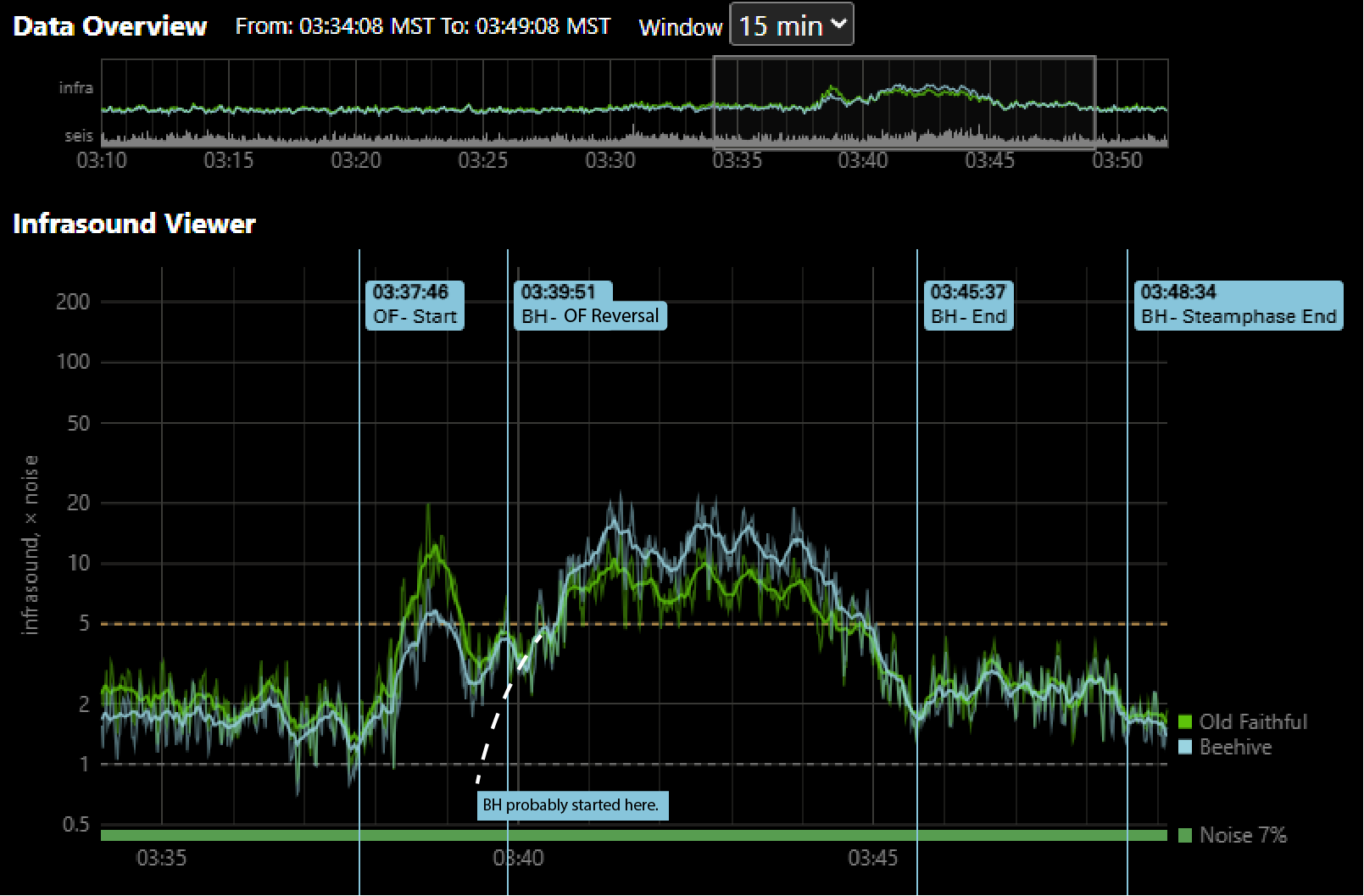
Acoustic trace for a concerted eruption of Beehive and Old Faithful Geysers, on Beehive was verfied on the webcam from 12 November 2026. In this case the webcam was looking at Old Faithful and missed the start of Beehive. Using the typical curve of Beehive's acoustic trace we can back calculate and estimate the minute that Beehive likely started.
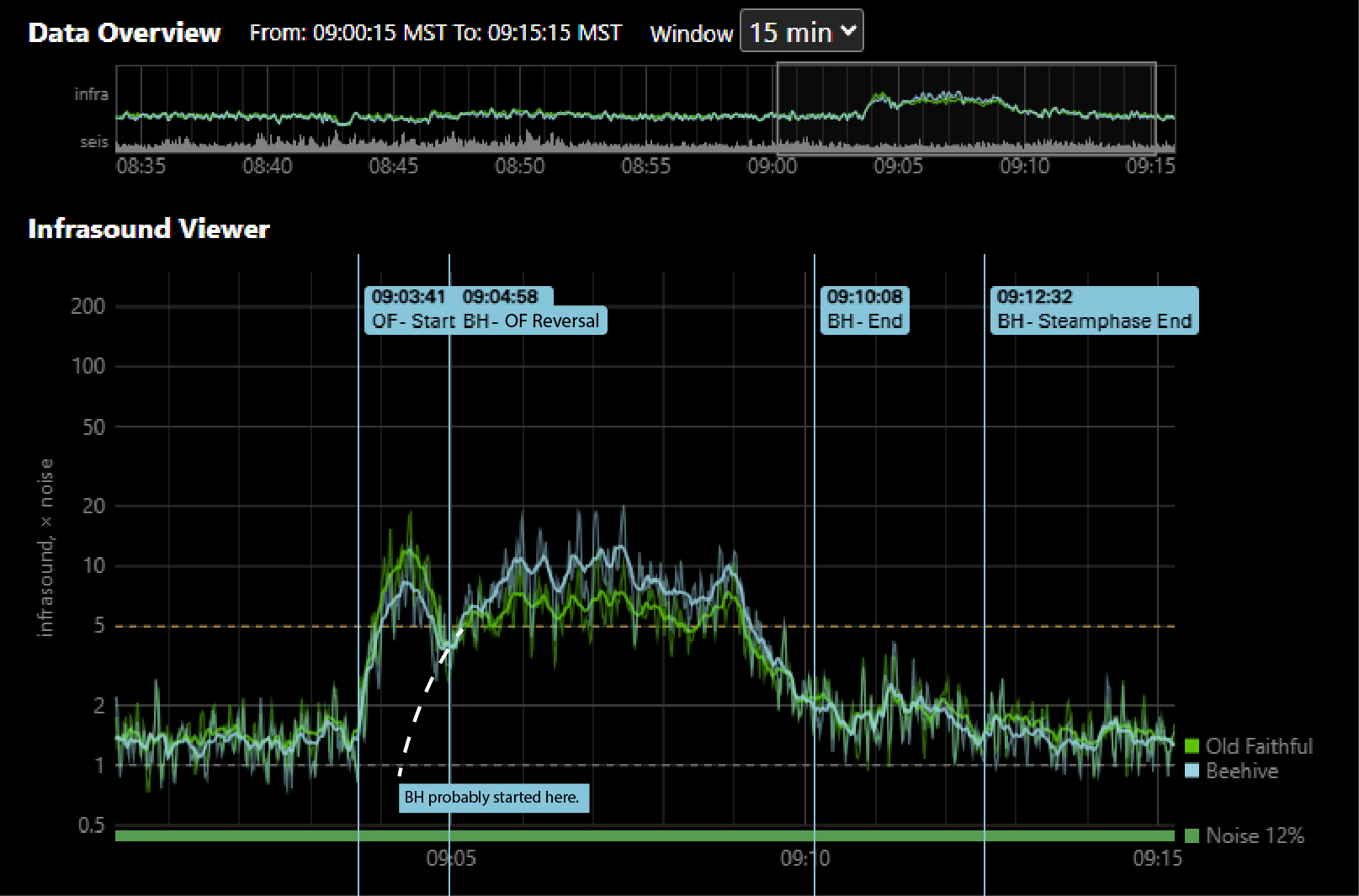
Acoustic trace for a concerted eruption of Beehive and Old Faithful Geysers, verfied on the webcam from 10 November 2026. In this case the webcam was looking at Old Faithful and missed the start of Beehive. Using the typical curve of Beehive's acoustic trace we can back calculate and estimate the minute that Beehive likely started.
Use caution when back calculating the start time for Beehive. Both of these instances really only provide an 'E ie' time (Electronic, in-eruption) for Beehive. We know that Beehive does not instantly jump to near full volume - it takes at least 10-30 seconds - and we know it probably didn't start simultaneously with Old Faithful or else there would not be a dip and reversal in the noise levels. If you're uncomfortable doing this then use the reversal time and report it as E, ie - include a screenshot!
Lion Geyser

An initial eruption of Lion Geyser as it transitions into its loud steam phase.
Lion is the closest geyser to YGH, about 1,100 feet to the south-southwest. At times it lets out deep-throated roars of steam just before it erupts, which gave it it's current name. Lion erupts in a series with a larger initial eruption, followed by one or more smaller ones. Eruptions start with water sputtering sluggishly from the vent, then build in strength and volume. The initial eruption ends in a powerful steam phase, while the follow-ups end more quietly. All of them show up in the infrasound as the classic slow ramp of rising sound. The initial eruption stands out because its steam phase keeps the sound high for longer.
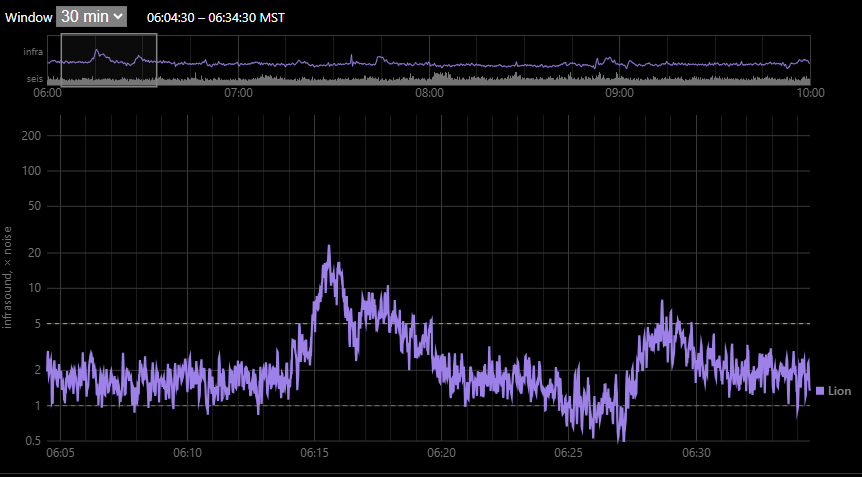
Acoustic trace for an initial eruption of Lion Geyser. Note the gradual build up, brief lull, and then rebound in noise. The rebound in noise is the transition from water to steam. The noise increase at 6:27 seems to be related to Lion and may be infrasound waves from it's post eruption steam phases. Beehive Geyser exhibits a similar pattern with it's steamphases.
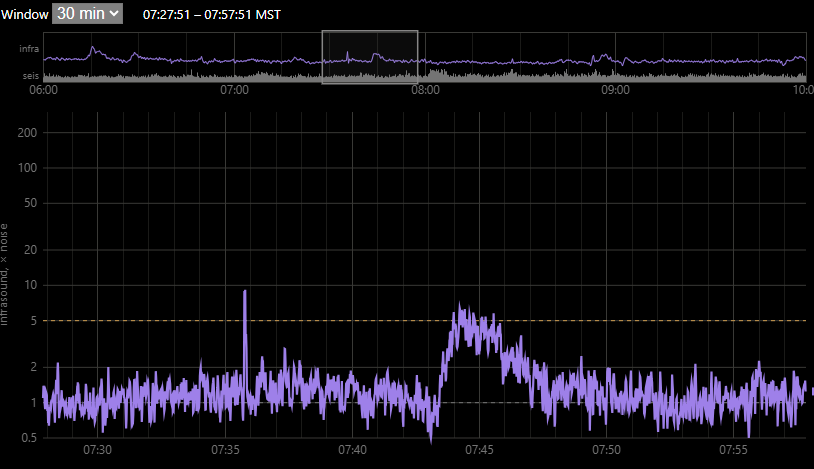
Acoustic trace a follow up eruption of Lion Geyser. Note the lack of rebound in noise, indicating a steam phase did not occur. The spike in noise at 7:35 is not from Lion.
Lion Minors Eruptions and Lion Roars
Lion Geyser is also capable of roaring without starting an eruption. The roars are usually brief, less than 10 seconds, but fairly loud. Ultimately they seem to be too breif to show up on infrasound. Below is an example of a roar which was observed on the webcam under exceptionally quiet conditions. The roar is indistinguishable from the background noise.
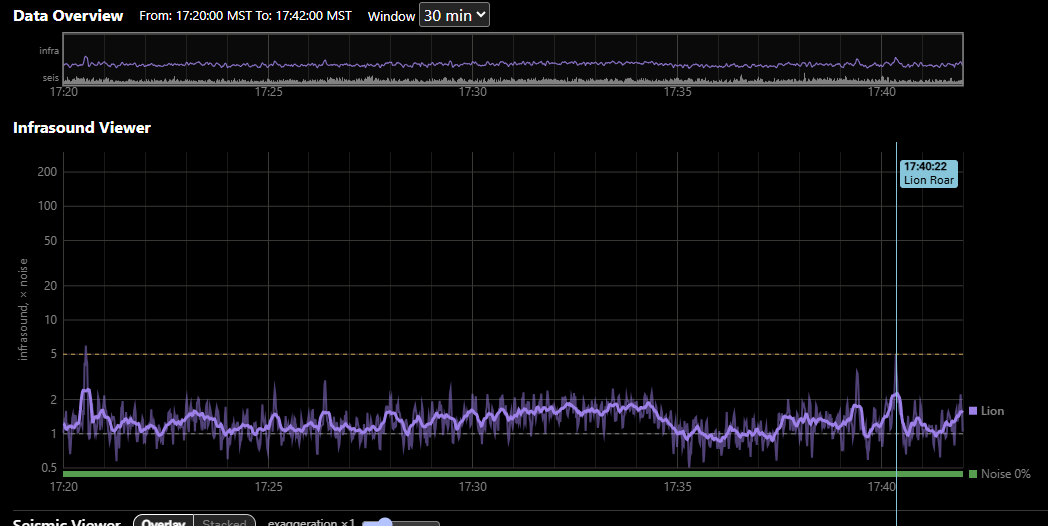
Acoustic trace of a Lion roar.
Sometimes a roar does turn into a small eruption with water sputtering and jetting up to 5-10 feet for as much as a minute before dying out. These typically happen near the end of series when follow up eruptions try and fail to initiate. They are visible on the infrasound traces under ideal conditions but without visual confirmation or a follow up eruptions should be considered questionable observations. Perhaps with time more data can be collected to refine observing Lion minors.
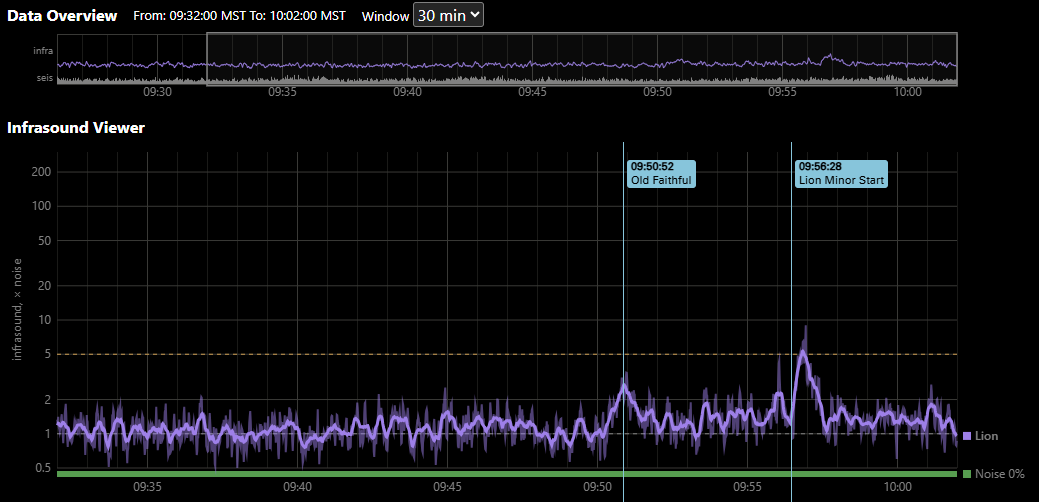
Acoustic trace of a Lion minor eruption, verified on the webcam. The acoustic trace barely reaches 5 times background noise levels and almost looks like an eruption of Old Faithful (which here occurred a few minutes earlier).
Doublet Pool
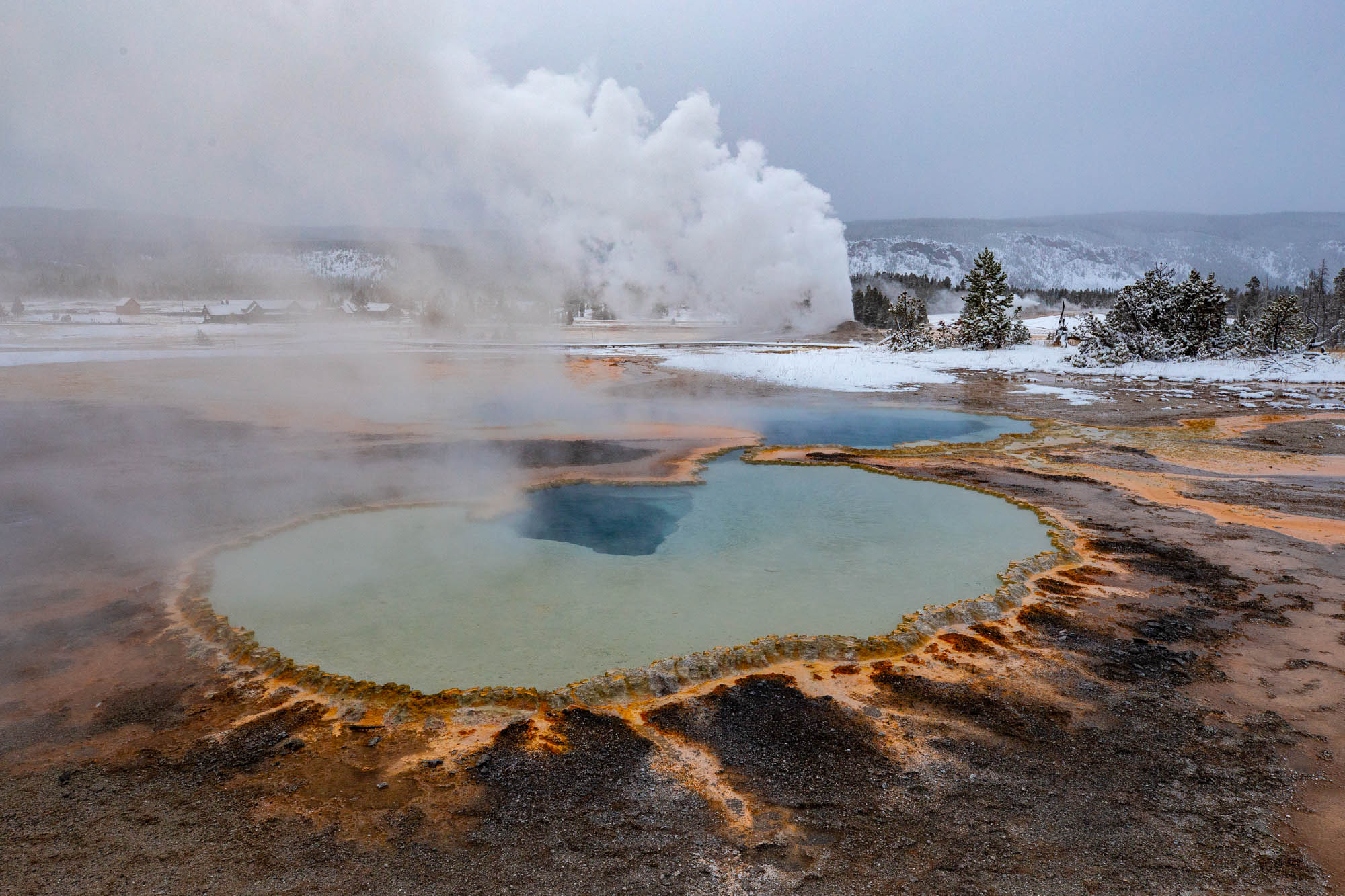
Doublet Pool is a large, typically quiet, hot spring in the middle of Geyser Hill. Here it is seen with Lion Geyser erupting in the background.
Doublet Pool is a large hot spring in the middle of Geyser Hill with two pools separated by a sinter bridge. Doublet Pool rarely erupts but it does have a cycle involving a subterranean eruption of sorts. Every 20-30 minutes enough energy forms in Doublet Pool to allow superheated steam bubbles to form and collapse created a series of rapid thumping that can be phsyically felt and audibly heard from the trail next to it. These thumps shake and rock the surface of the pool.
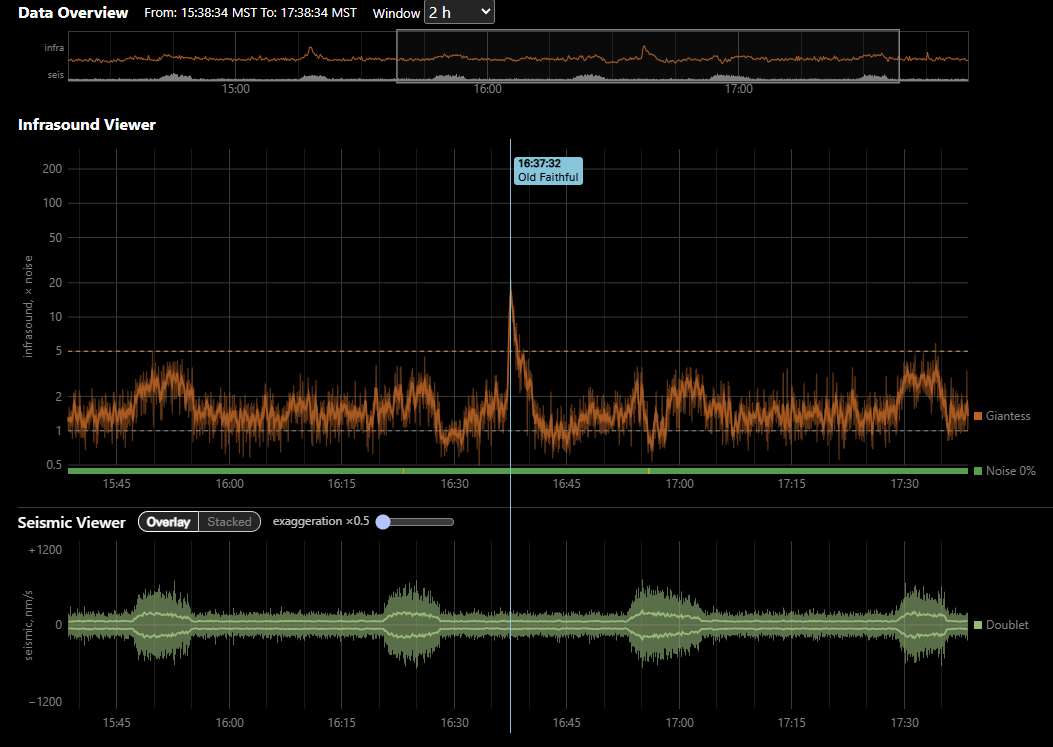
Doublet Pool thumps as seen on the Seismic Viewer, with faint infrasound traces. Doublet and Giantess are almost perfectly in line from YGH.
Doublet Pool's thumps send out relatively high frequency vertical seismic waves which YGH readily picks up. It is visible on the Seismic Viewer with the Doublet preset checked. Under very quiet conditions Doublet Pool's thumping will be visible in the infrasound data. It is strongest in the direction of Giantess - which is almost perfectly inline with Doublet Pool - and weaker on the Old Faithful and Beehive bearings.
The Castle-Grand-Sawmill Zone
To the south and west of YGH are two large and loud geysers and a cluster of energetic but small geysers between them. The two large ones, Castle and Grand, are two of the stars of the Upper Geyser Basin; Grand Geyser is probably the tallest most frequently active geyser ever known. These two features readily show up on infrasound. Between them is the Sawmill Complex, which includes both Spasmodic and Sawmill Geysers. These two geysers are quite close to YGH, but not enough for them to be reliably heard by the sensor.
Castle

An major eruption of Castle Geyser as it transitions into its loud steam phase.
Castle is about 2,000 feet to the southwest. Its eruptions start suddenly and pulse with sound and energy. It has two kinds of eruptions. All eruptions begin with a water phase which pulses between periods of strong jetting up to 80 feet and near total quiesence. Some of these pauses can last multiple minutes. Minor eruptions happen when one of these pauses never restarts. Major eruptions occur when the quiet pulses are replaces by increasingly powerful blasts of steam. After about 20 minutes this gives way into a steady and loud steam phase. Both kinds show up clearly in the infrasound, and, as with Lion, the steam phase of a major eruption is plain to see.
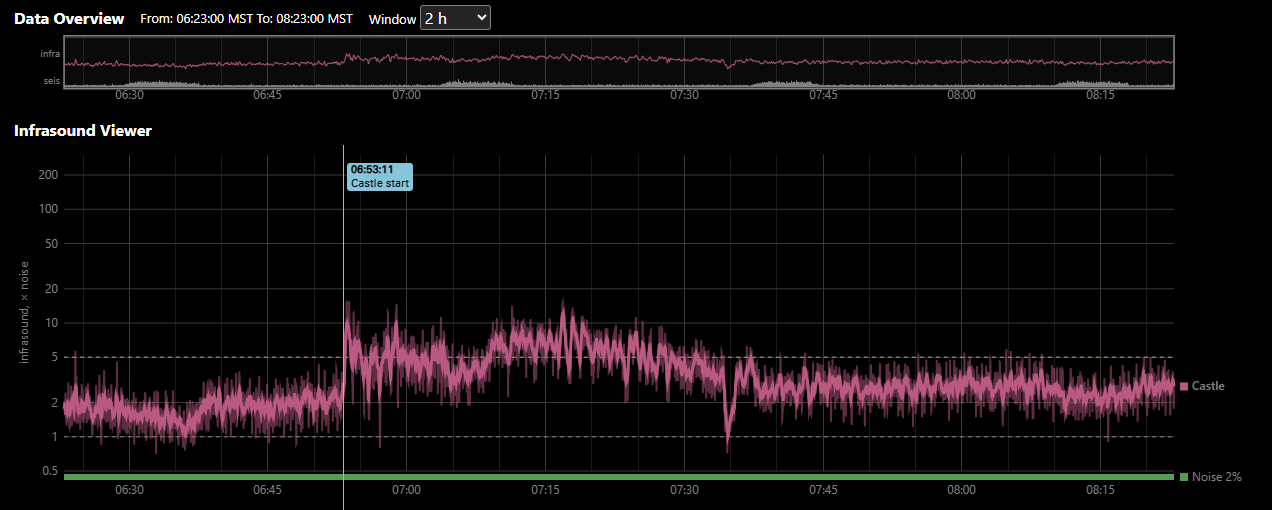
Acoustic trace for a major eruption of Castle Geyser. Note the abrupt build up and sustained noise. The later osciallations in noise are from periods where Castle's steam phase osciallates in energy. Note the duration - Castle steam phases can last over two hours. The infrasound from them can be the loudest noise source on quiet mornings more than two hours after the eruption.
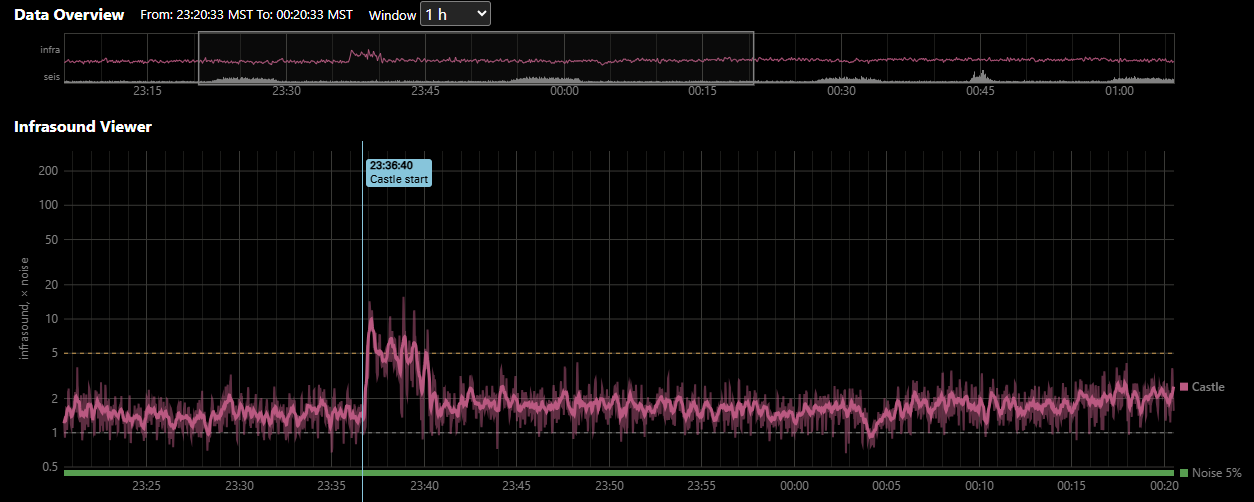
Acoustic trace for a minor eruption of Castle Geyser. Note the identical start as the major eruption, but the equally abrupt cessation of noise after only a couple of minutes.
Real and False Pauses of Castle Geyser
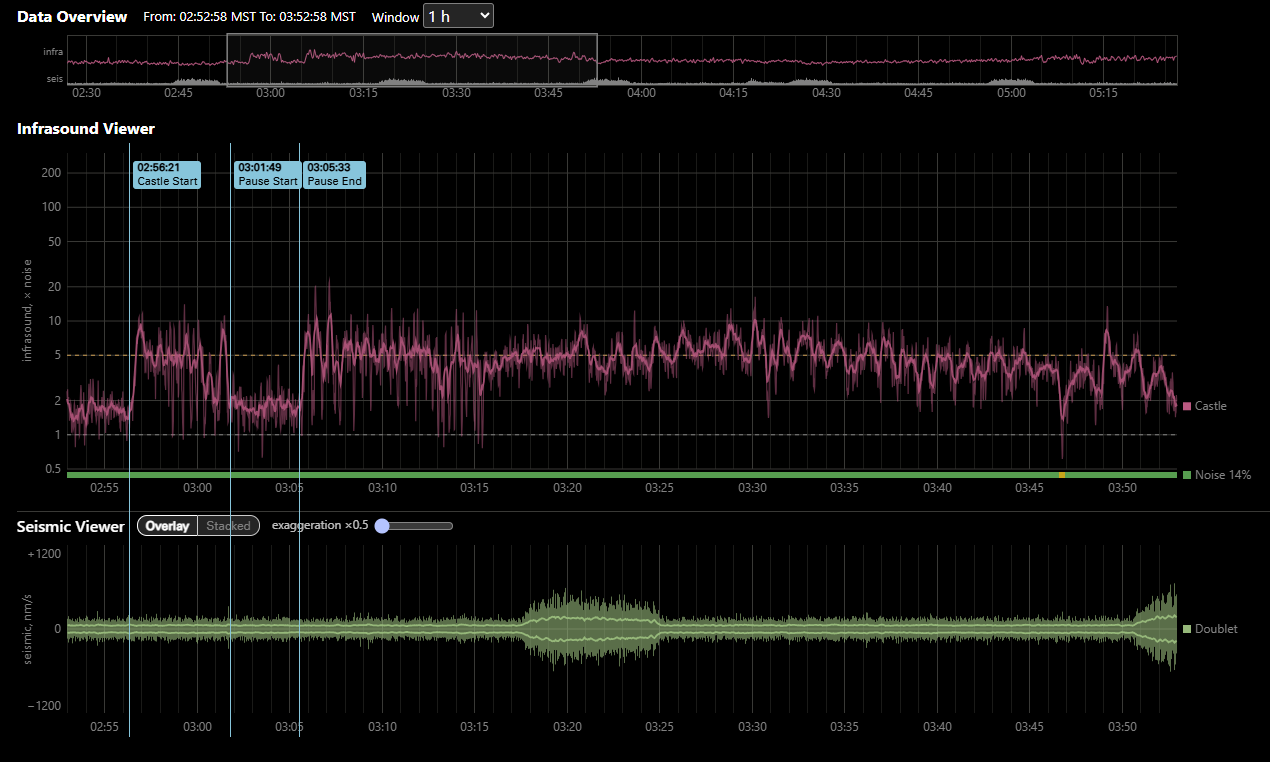
Acoustic trace for a major eruption of Castle Geyser which included a multi-minute long pause in the middle of it.
Castle Geyser can have very long pauses during it's eruption. Essentially it seems like Castle tries to stall into a minor but fails and rebounds back into a major eruption. These are visible in the infrasound; the pauses typically have a very abrupt onset and ending. It is possible for there to be false pauses in the infrasound data if some other, louder, feature makes noise in a different direction. Most commonly this is Beehive or Old Faithful Geysers, whose eruptions make Castle's noise level relative to background drop.
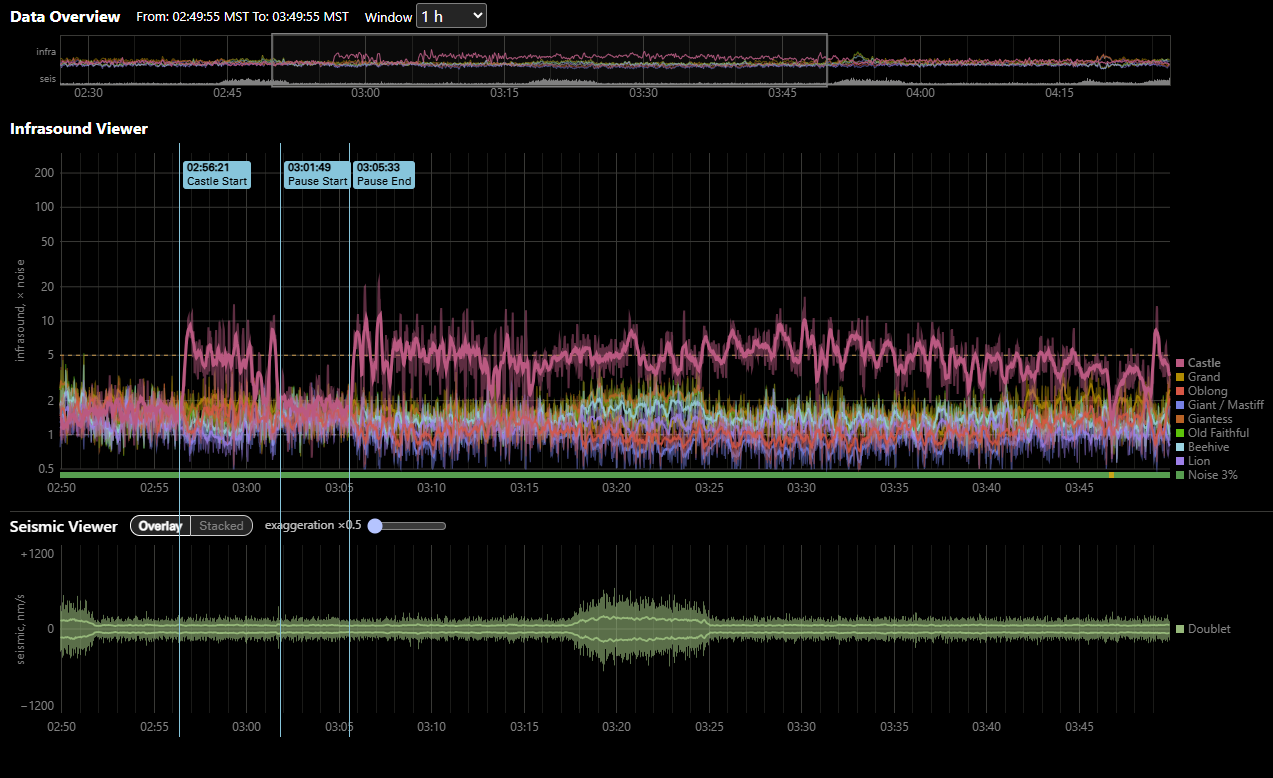
Acoustic trace for a major eruption of Castle Geyser which included a multi-minute long pause in the middle of it. In this instance all of the other features have been turned on and you can see that no other feature interfered with the noise sensing from Castle. Castle simply stopped making noise.
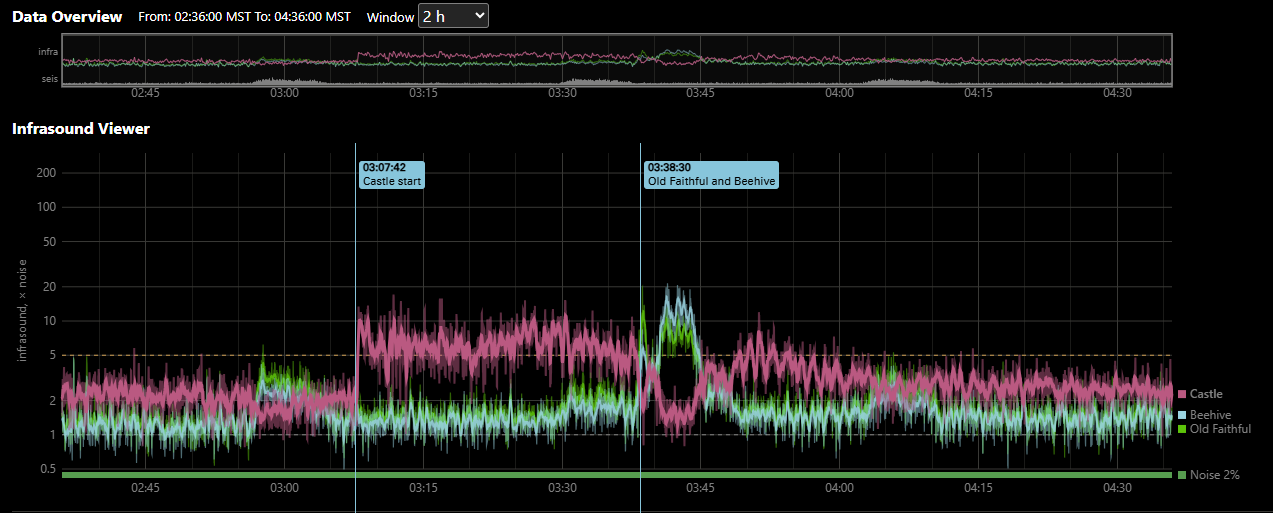
Acoustic trace for a major eruption of Castle Geyser which included a multi-minute long false pause in the middle of it. This false pause does not have the abrupt onset and restart of a real pause and was caused by an eruption of both Beehive and Old Faithful reducing Castle's 'share' of the sensed noise.
Grand
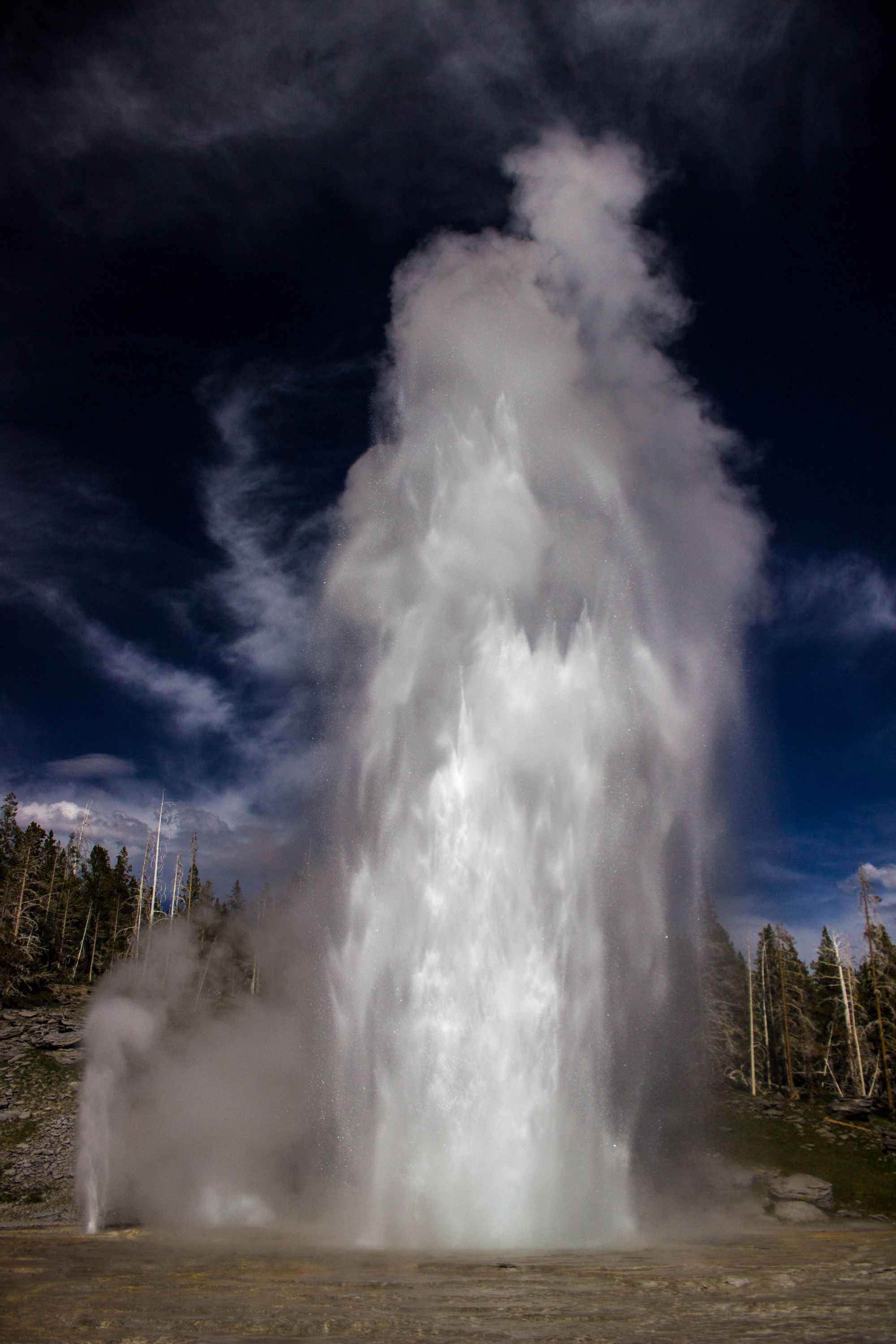
Grand Geyser is probably the largest and most powerful frequently active geyser in the world. It's eruptions routinely approach 200 feet in height and are accompanied by eruptions of Vent and Turban Geyser.
Grand is almost due west, about 1,700 feet away. It and the features beyond it to the north are harder to tell apart. Grand and Giant are only about 25 degrees apart as seen from the array, close enough that each one’s sound leaks a little into the other’s beam. Grand’s sound shows up faintly on Giant’s line, and Giant’s on Grand’s. Grand is still clearest in its own direction, and its eruptions stand out plainly. The sound level closely follows the energy of the eruption, including the moments when Grand seems to slow down. Grand is also unusual in being able to stop and restart its eruptions in a series of distinct bursts. The pauses between bursts can bring activity to a complete stop for up to a minute, and the infrasound drops almost to nothing with it.
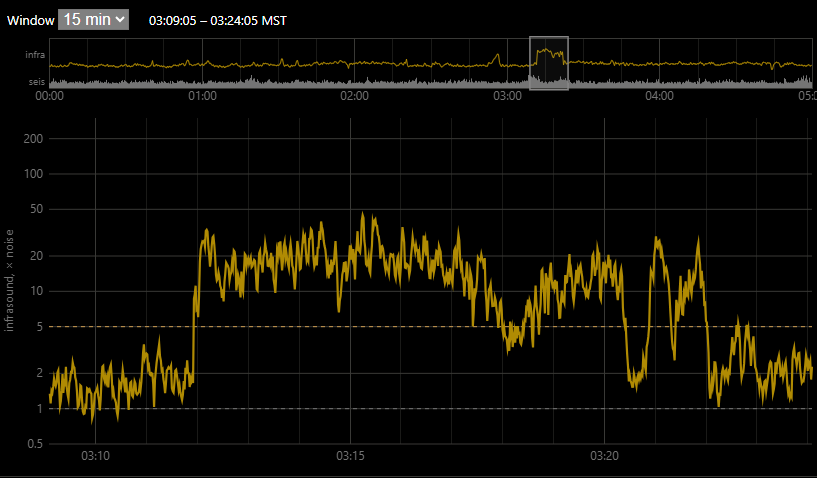
Acoustic trace for an eruption of Grand Geyser. The V-shaped dip in noise is the normal 'dip' in observed energy of the eruption about 5-7 minutes after the start. The deep drop in noise at 3:20:30 is the total pause in eruptive activity between the first burst (from 3:12 to 3:20) and the second burst (from 3:20:50 to 3:22:00). The eruption occurred in the middle of the night and until recently this information would have been unavailable.
Grand Checker - What is a pause and what's not?
The Grand Checker is an application within the YGH Monitor which is an experimental tool for trying to determine what dips in Grand's sound are real pauses versus eruption slow downs or interference from other features. A growing body of observed and verified single and multiburst eruptions are being used to build a model of what both look like on the infrasound monitor to compare to new eruptions which can not be observed due to weather, nightfall, or the camera being pointed elsewhere.
Sawmill Complex
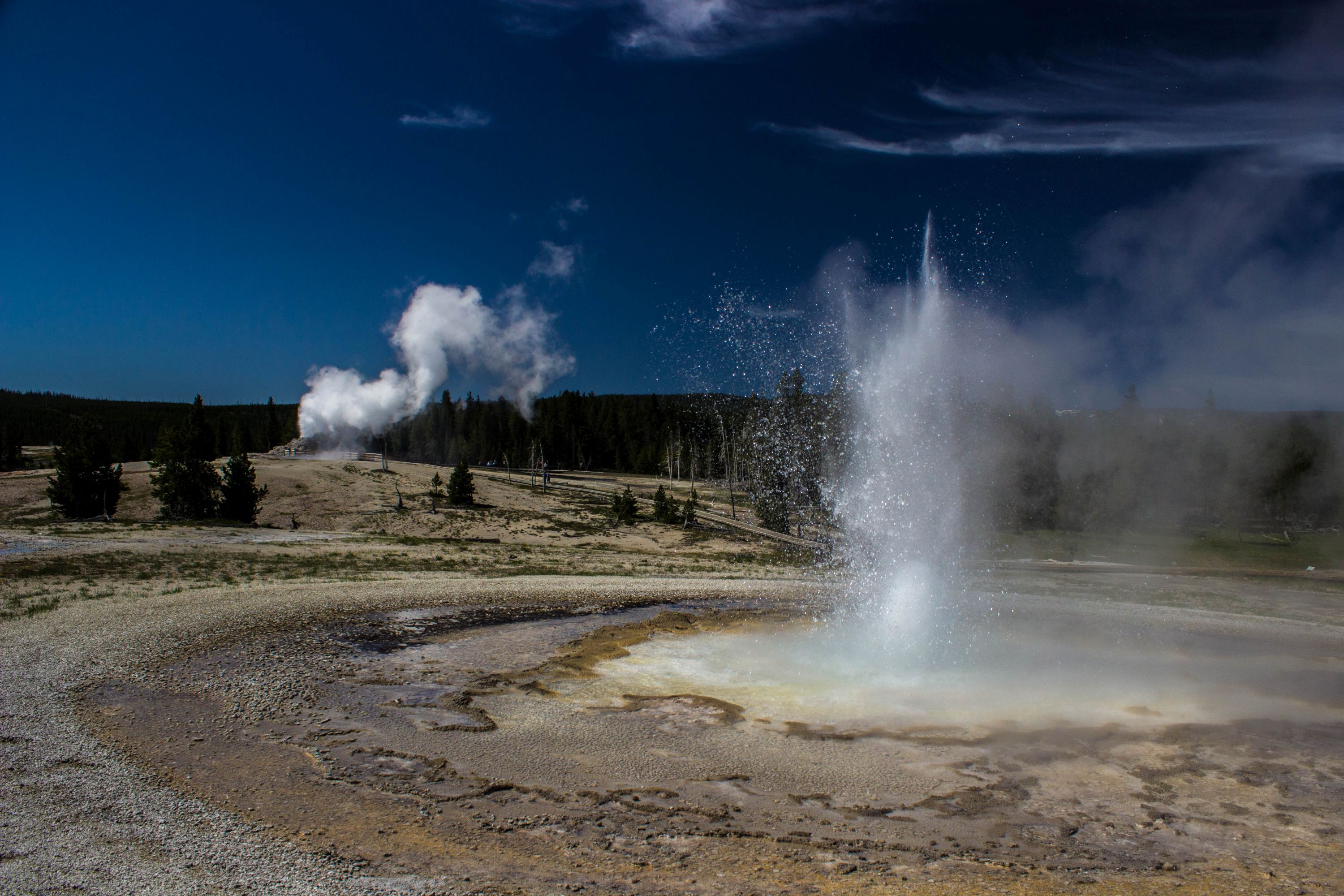
Sawmill Geyser (foreground) with Castle Geyser in steamphase (background). YGH is behind the camera and to the left.
The Sawmill Complex is a cluster of interconnected springs and geysers south of Grand and more or less in between Grand and Castle (as far as YGH is concerned). This complex is highly energetic and active with something erupting in it about half of the time. The groups is (acoustically) dominated by Sawmill Geyser and Spasmodic Geyser. Sawmill Geyser erupts for up to 4 hours with repetitive violent and concussive explosions of water. Spasmodic Geyser erupts from a dozen vents with a combination of heavy bursting and jetting. This high amount of energy is apparently one of the problems with the group - it just always makes noise and as such it seems to fall into the backgorund. It doesn't help that a ridgeline is between the features and YGH which partially blocks the noise. Under ideal conditions the noise from Sawmill Geyser has been faintly visible, but there is no reliable 'signal' from Sawmill as yet. I've included it here because Sawmill is an important feature and I have been asked about its visbiility in infrasound.
Giant Geyser and Mastiff Geyser
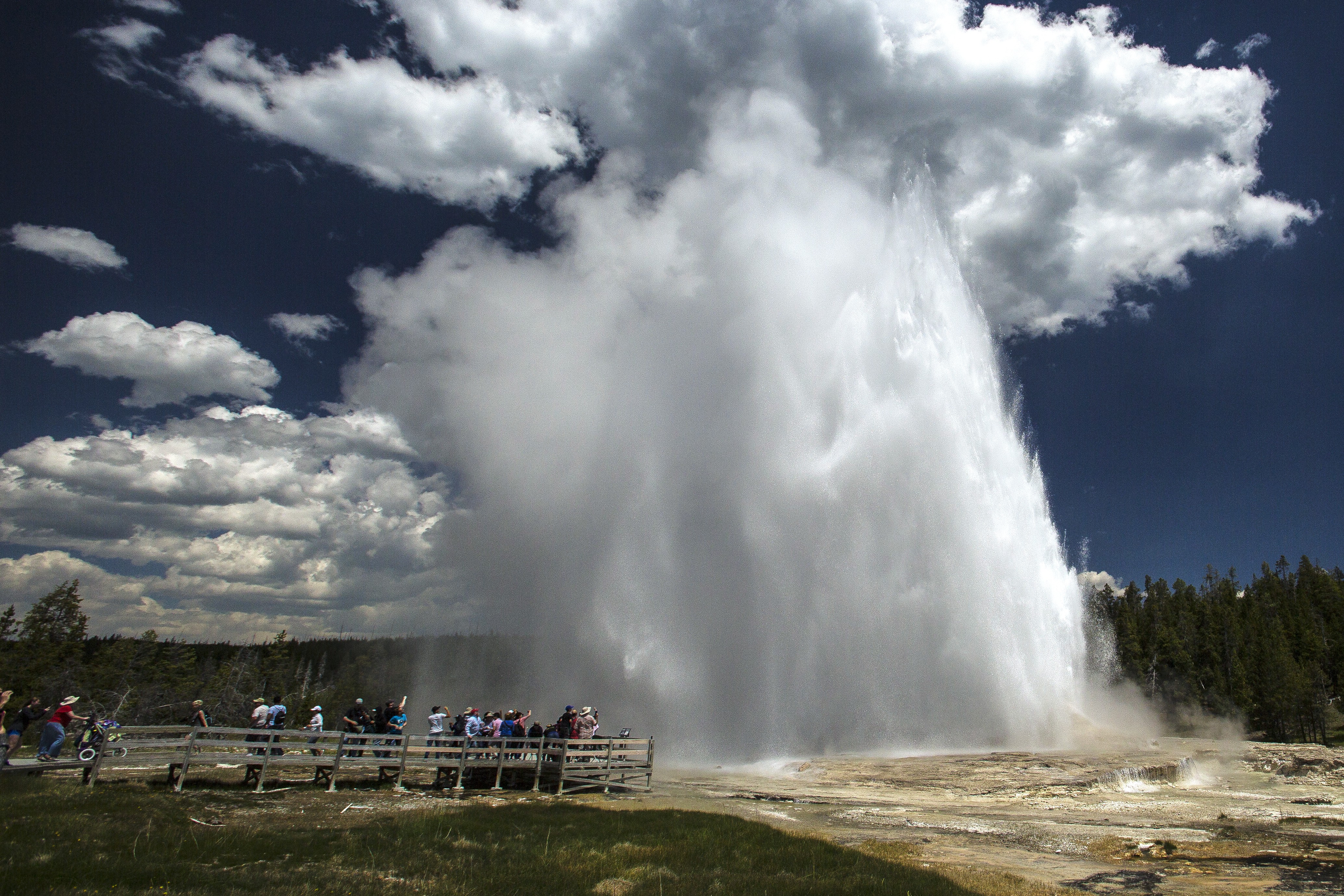
Giant Geyser is the second largest and most powerful geyser in the world. This eruption on 9 June 2018 was one of the smaller ones documented, it was 'only' 150 feet tall, but over 100 feet across.
Giant is, well, giant. It’s the second-tallest active geyser in the world, after Steamboat, with eruptions reaching about 250 feet, and the sheer volume of water is hard to describe. Both the eruption column, with its roar of escaping steam, and the tons of water crashing back to the ground make enough sound for the infrasound sensors. There’s no mistaking a Giant eruption, whether on the sensors or in person. At about 3,000 feet to the northwest it’s the farthest geyser from the array, and also the loudest.
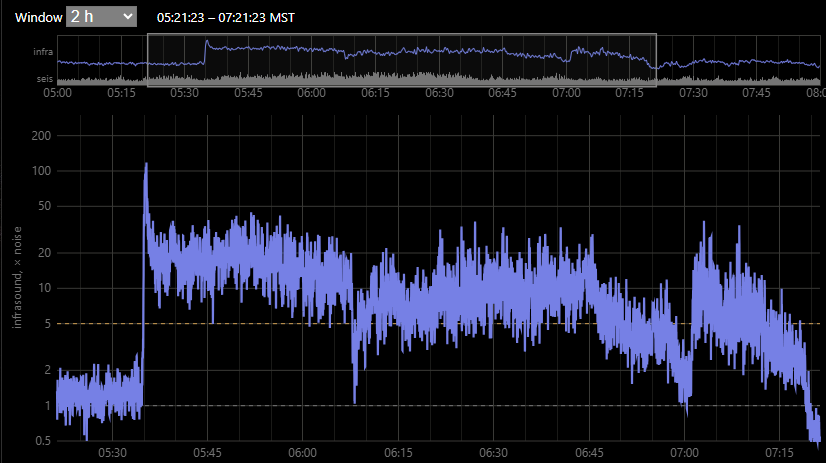
Acoustic trace for an eruption of Giant Geyser without an eruption of Mastiff. Note the spike at the start - up to 100 times background noise - and the duration - over an hour long.
Next to Giant is Mastiff, a key player in the buildup to Giant’s rare eruptions. Mastiff is a significant geyser in its own right, with two vents reaching up to 50 feet and arcing 20 to 30 feet across. It sometimes erupts in the minutes before Giant, and it often, though not always, shows up in the infrasound. Of the four verified eruptions of Mastiff, three were visible in infrasound data. It sits on the same platform as Giant, so the array hears the two from the same direction.
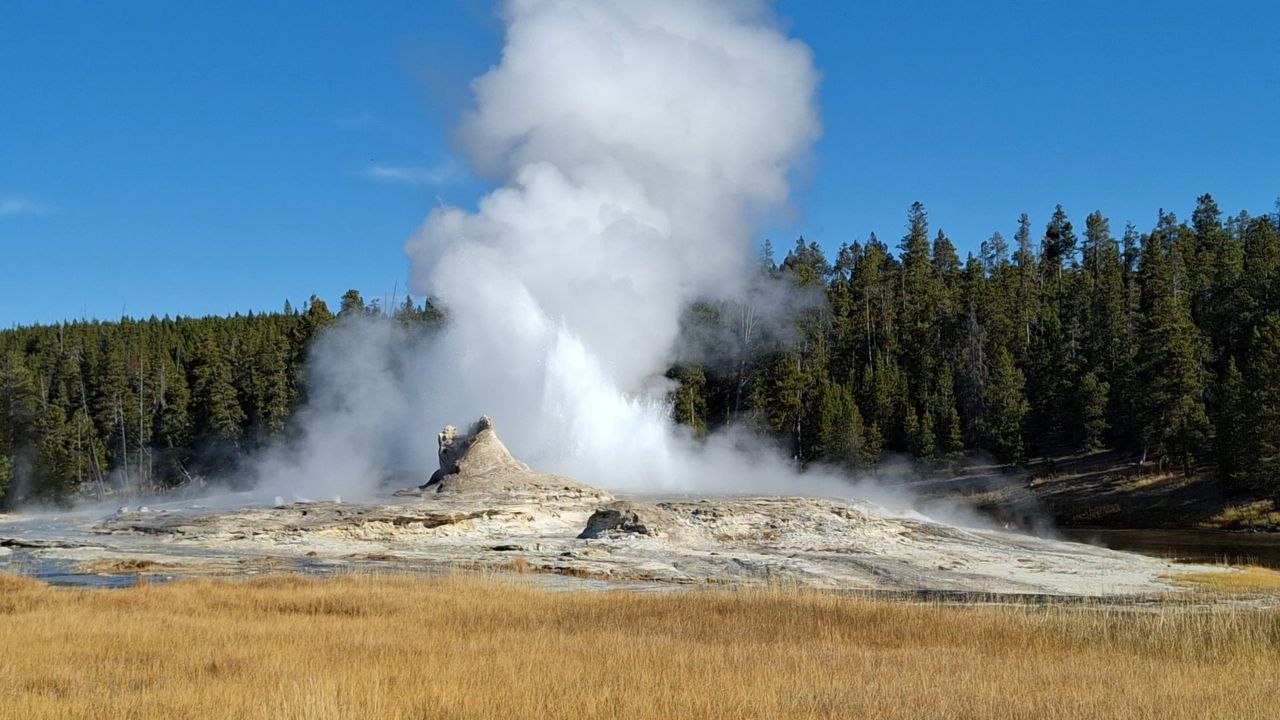
Mastiff Geyser in eruption on 5 October 2026. This eruption was not visible on infrasound. I have not seen Mastiff in eruption, so this photo was graciously contributed by Tara Cross.
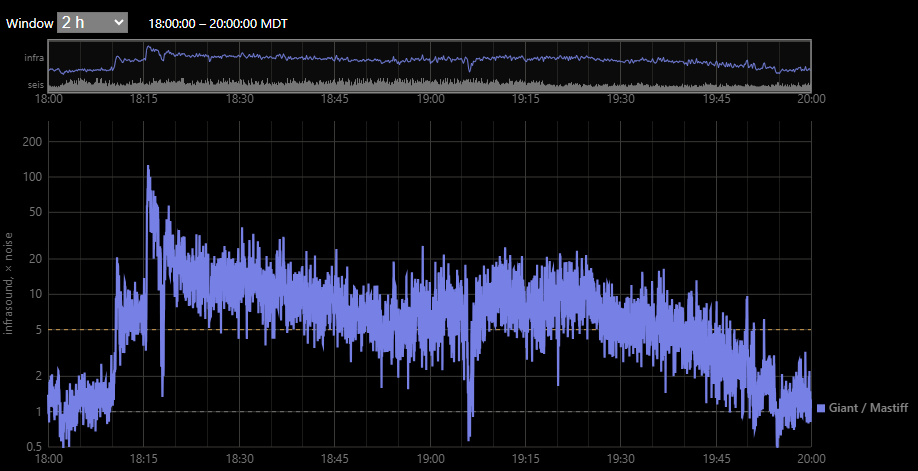
Acoustic trace for an eruption of Giant Geyser which was preceeded by a 5 minute long eruption of Mastiff Geyser - the step in noise before Giant's acoustic trace.
Oblong Geyser
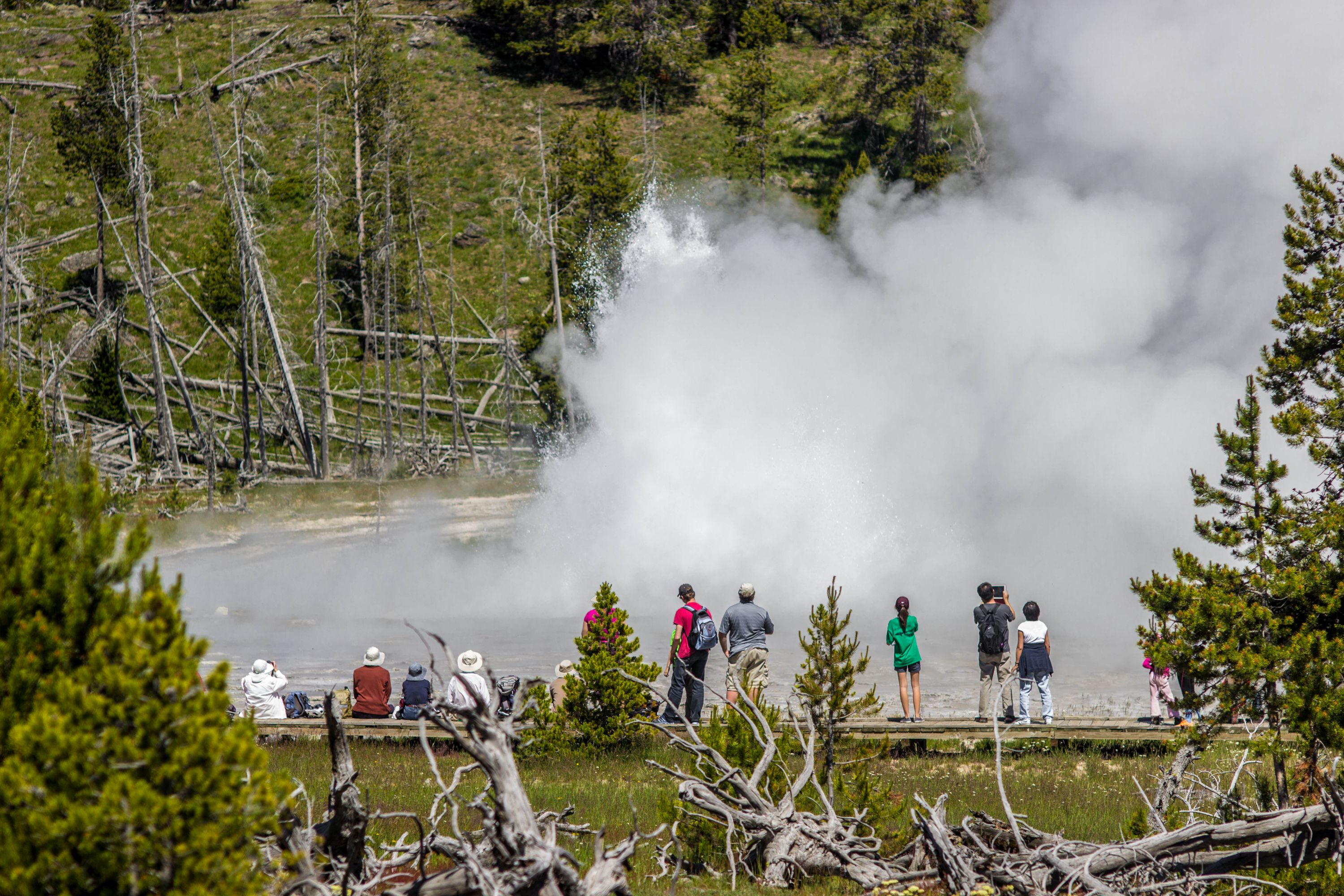
Oblong Geyser is not a particularly tall feature, but it's eruptions put out tens of thousands of gallons of water and are accompanied by violent subterranean thumping which can be felt at far distances by seismometers.
Oblong is probably the hardest geyser to observe from YGH. It’s about 2,600 feet to the west-northwest, and its activity is a long-term indicator for Giant: when Oblong erupts more often, Giant usually becomes more active. Oblong isn’t a particularly large or loud geyser. Its eruptions are mostly heavy boiling and surging, so the infrasound sensors don’t reliably pick it up. But like Doublet Pool, Oblong thumps violently at depth during its eruptions, as large steam bubbles form and collapse in its plumbing. On the nearby trail you can feel it. Some thumps are strong enough that you feel them travel up through your feet and legs into your spine, and you can even hear the pounding. Those thumps travel through the ground as strong side-to-side shaking that reaches the YGH seismometer. Even when the infrasound can’t hear Oblong, the seismometer feels it.
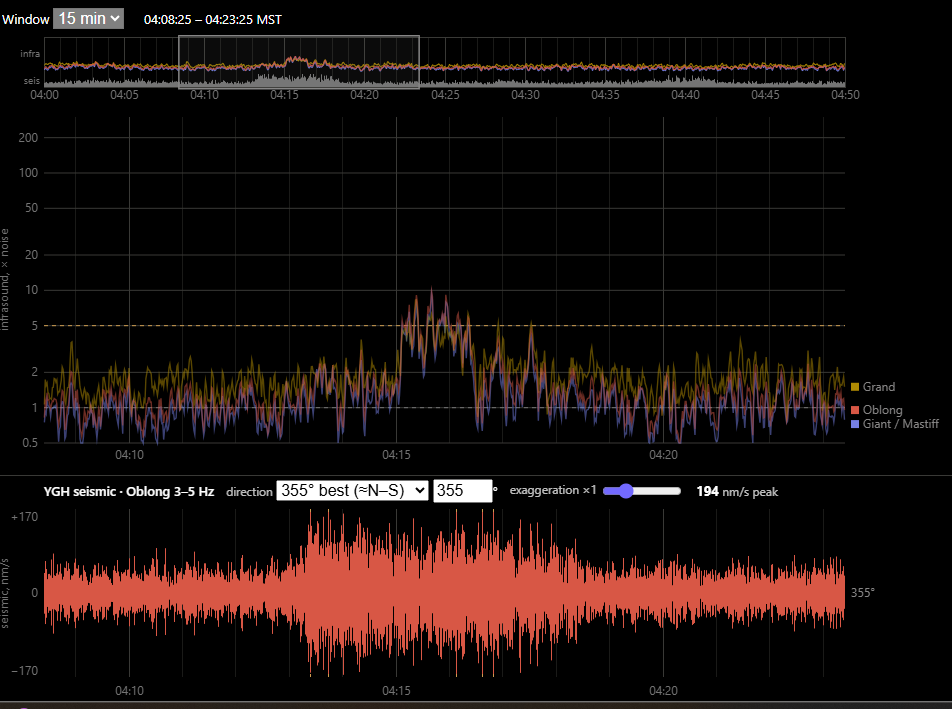
Acoustic trace and seismic trace for an eruption of Oblong Geyser. Note that I included the traces for Oblong, Grand, and Giant/Mastiff and that the responses are nearly identical because they are almost in the same direction from the sensor. The primary difference however is that Oblong is very apparent in the 3-5Hz bands of the YGH Seismometer's horizontal waves, seen below. The start of Oblong is actually the start of those seismic waves at 04:13 and not the arrival of the acoustic waves at 04:15.
Oblong is also unqiue in that it is probably the only feature where the seismometer provides the most accurate and consistent eruption start and end time - even over direct observation. The eruption of Oblong starts during one of Oblong's periodic episodes of superheated boiling. This boiling surges slightly and a flood of water goes across the platform and is accomapnied by the start of the heavy thumping. The eruption also ends when the thumping and boiling ceases. Under ideal conditions these two events are unmistakable in the field but during bad weather or when the boardwalks are full of people they can be difficult to determine. The situation for the webcam is at a severe disadvantage because the webcam can't actually see Oblong's pool and instead relies upon the sudden increase in steam which occurs in the last few seconds before water is visible. Even then, only when water is visible and near its full height will infrasound reach YGH. The seismic waves produced by the thumping - which only occurs during an eruption - reach the sensors up to 40 seconds before the webcam visually is able to recognize that Oblong may be starting an eruption, and up to 2 minutes or more before the infrasound arrives.
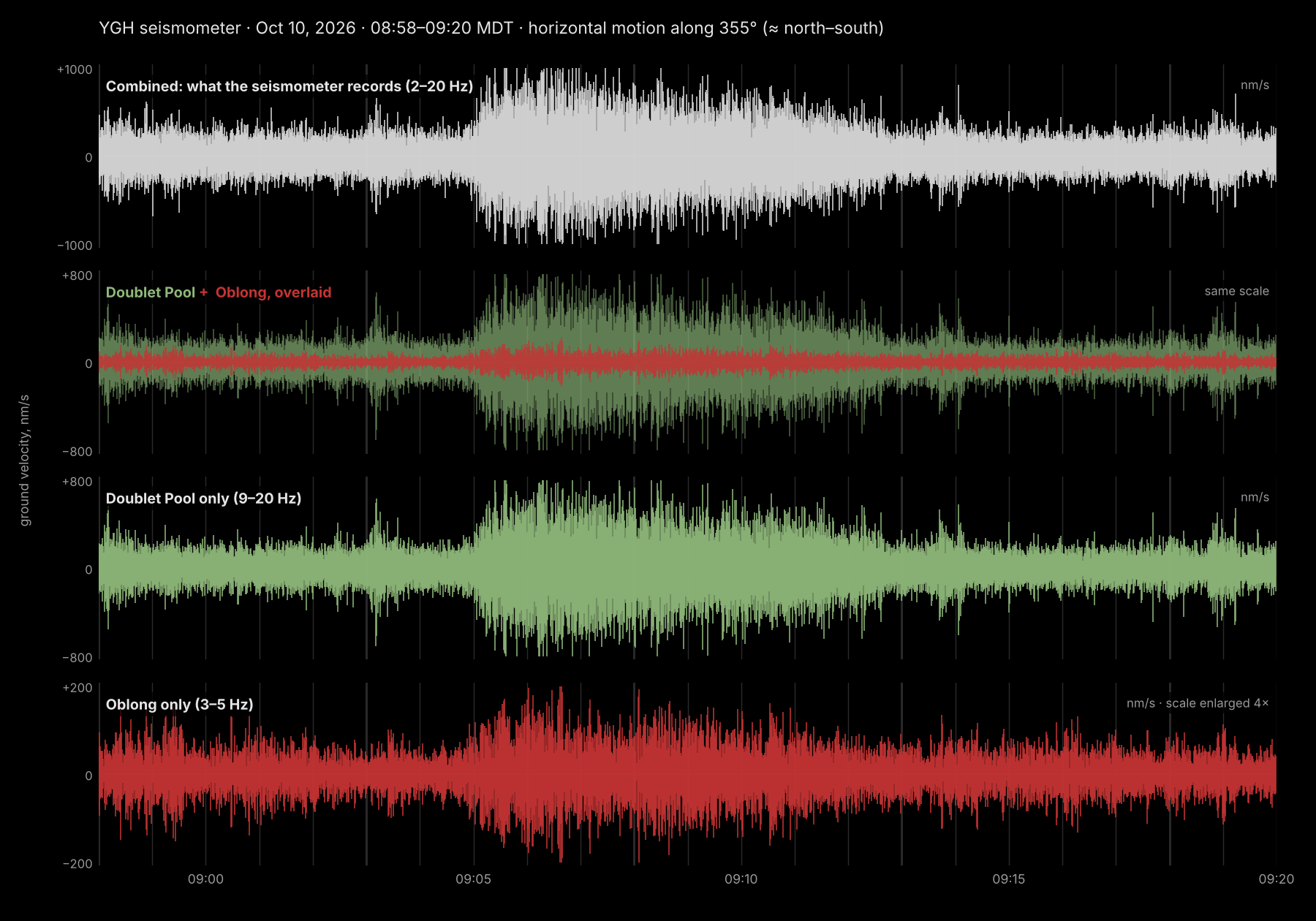
Combined seismic data for YGH from 10 October 2026 from 08:58 to 09:20. Doublet Pool began a thumping episode at 8:05, almost at the exact same time that Oblong erupted. The data coming in from YGH can be filtered into both orientation and frequency. Vibrations from Doublet are at higher frequencies (9-20Hz) and primarily vertical, while vibrations from Oblong are slower (3-5Hz) and mainly horizontal.
Oblong has a good chance of erupting while Doublet Pool is thumping. That’s not because the two are connected: Doublet simply thumps almost a quarter of the time. Looked at directly, the seismic record mixes the two together. Pull them apart and they’re distinct. Doublet’s vibration is high-pitched, at roughly 9 to 20 hertz, and mostly up and down. Oblong’s is a much lower 3 to 5 hertz and side to side. Filter for Oblong’s lower frequencies and its horizontal motion, and its eruptions stand out from Doublet’s thumping.
As an interesting aside, these waves are called Love Waves. If you were at YGH and were facing Oblong and could feel them you'd notice that the waves would rock you side to side - not towards and backwards from Oblong. These slow moving but high amplitude side to side Love Waves are the destructive waves felt at long distances from the epicenters of major earthquakes.
As an interesting aside, these waves are called Love Waves. If you were at YGH and were facing Oblong and could feel them you'd notice that the waves would rock you side to side - not towards and backwards from Oblong. These slow moving but high amplitude side to side Love Waves are the destructive waves felt at long distances from the epicenters of major earthquakes.
False Geysers - Noises That Are Not Eruptions
There are sources of noise which can quite effectively mimic geyser eruptions on infrasound. The most common ones are planes and noises from the Old Faithful Visitor Complex.
Airplanes
Aircraft routinely fly above and around the Upper Geyser Basin. Jetliners at cruising altitude, helicopters and light planes over the park, all generate infrasound. Their sounds tend to reach YGH as an increase and decrease in noise, often not entirely unlike a geyser erupting.
Planes are a moving object, and as they move the direction their sound comes from changes. In general, a plane will show up on the infrasound as a series of peaks in sound which share the same general shape but show a progression in peaks in time.
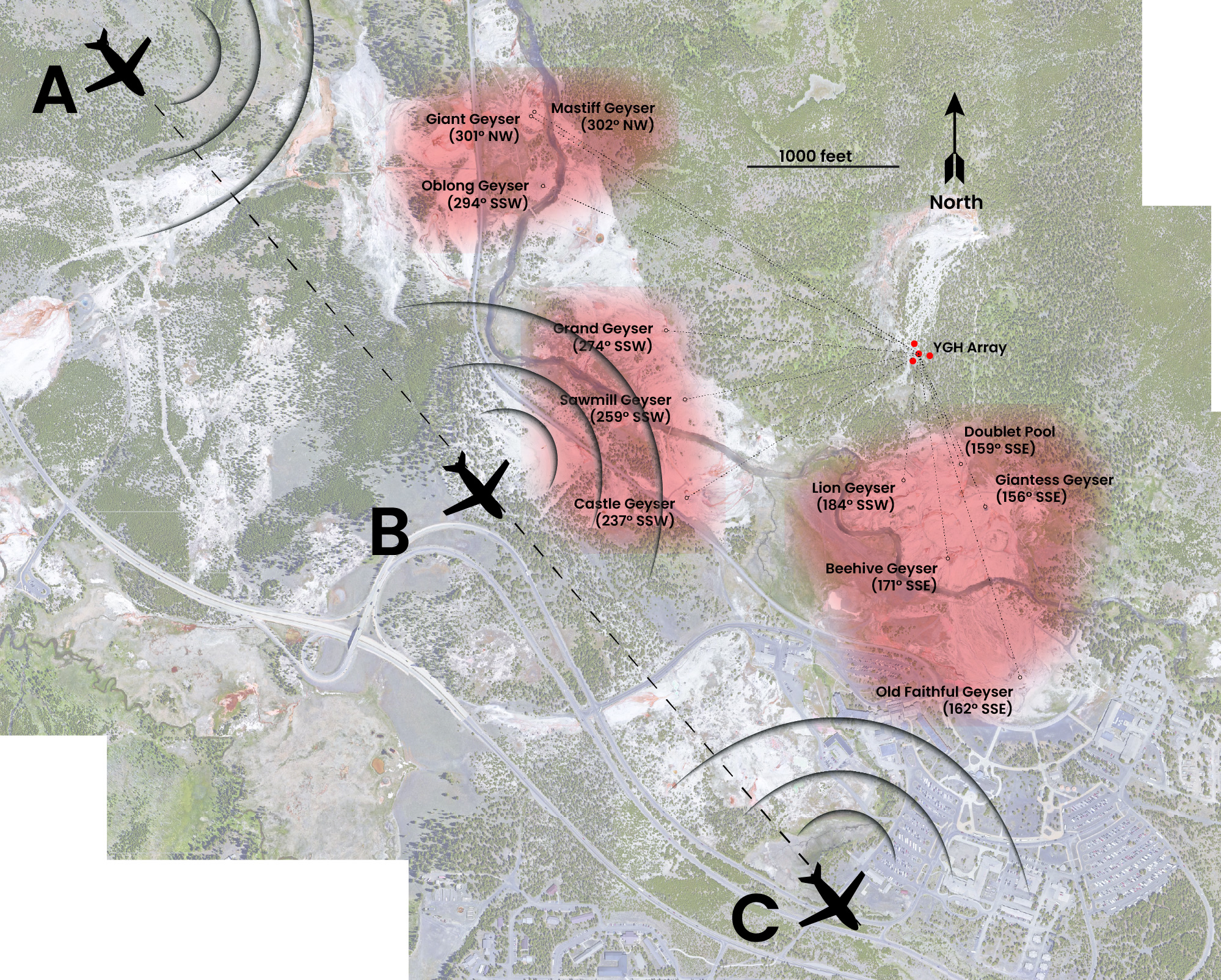
Graphic showing how a plane moving northwest and south of YGH would first show up as noise from the West (point A), then the south west (Point B), then the south (C). This scenario occurred on the evening of November 6, 2026.
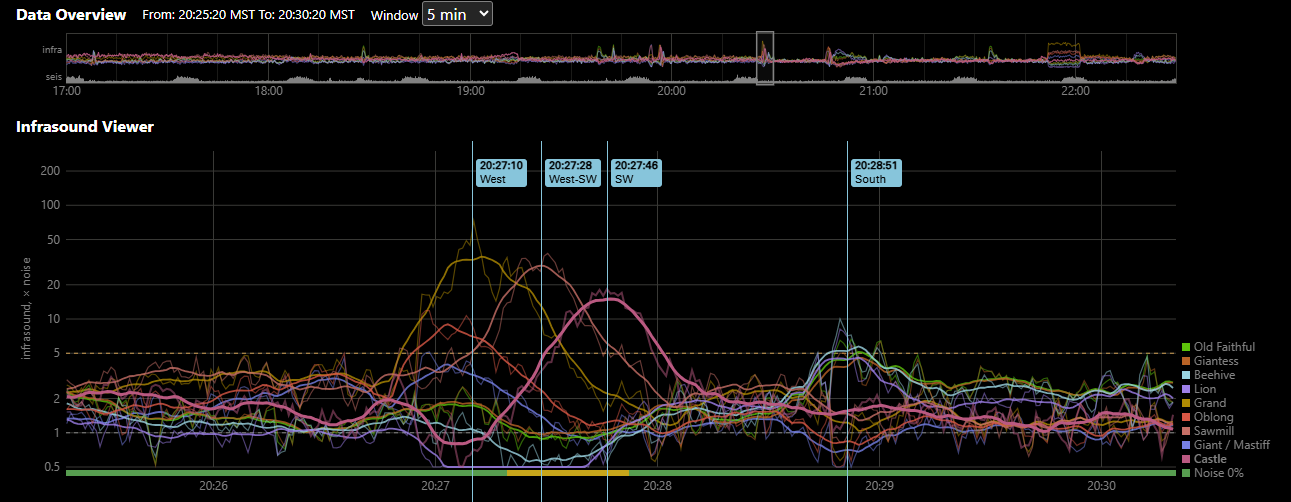
Infrasound trace of what was probably a plane whic was first audible from the West-northwest, then west, then southwest, and finally west.
Trucks and Heavy Equipment and ????
Loud noises from trucks and heavy equipment on the road can sometimes come through as pulses from the general direction of the intersection. Sometimes we don't really know what the source of the sound is, only that is probably didn't come from a geyser.
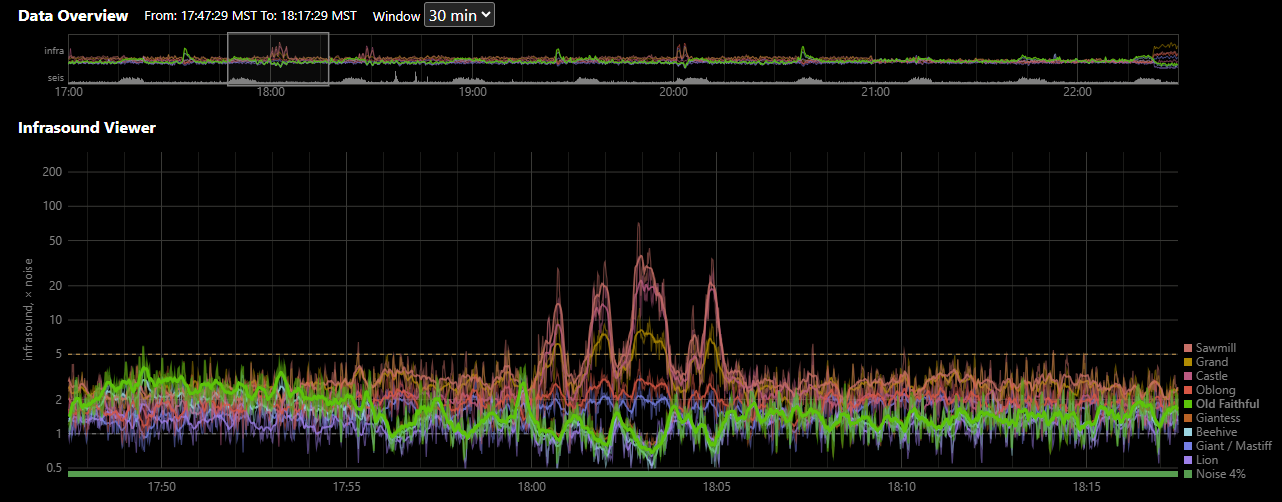
Acoustic trace of something making a loud noise in the direction of the intersection.

 v.2026.11.12.A
%20--%3e%3cdefs%3e%3cstyle%3e%20.st0%20{%20fill:%20%23fff;%20}%20%3c/style%3e%3c/defs%3e%3cg%3e%3cpath%20class='st0'%20d='M55.7,107.69h-11.41l-2.1,5.82h-3.6l9.46-26.01h3.94l9.42,26.01h-3.6l-2.1-5.82ZM54.73,104.91l-4.73-13.21-4.73,13.21h9.46Z'/%3e%3cpath%20class='st0'%20d='M80.79,100.43c-1.49,1.44-3.76,2.16-6.81,2.16h-5.03v10.92h-3.42v-26.16h8.45c2.95,0,5.2.71,6.74,2.14,1.54,1.43,2.31,3.27,2.31,5.52s-.74,3.98-2.23,5.42ZM78.19,98.53c.9-.83,1.35-2,1.35-3.53,0-3.23-1.85-4.84-5.56-4.84h-5.03v9.61h5.03c1.9,0,3.3-.41,4.2-1.24Z'/%3e%3cpath%20class='st0'%20d='M102.53,100.43c-1.49,1.44-3.76,2.16-6.81,2.16h-5.03v10.92h-3.42v-26.16h8.45c2.95,0,5.2.71,6.74,2.14,1.54,1.43,2.31,3.27,2.31,5.52s-.74,3.98-2.23,5.42ZM99.92,98.53c.9-.83,1.35-2,1.35-3.53,0-3.23-1.85-4.84-5.56-4.84h-5.03v9.61h5.03c1.9,0,3.3-.41,4.2-1.24Z'/%3e%3cpath%20class='st0'%20d='M112.66,112.85c-1.36-.61-2.43-1.46-3.21-2.55-.78-1.09-1.18-2.35-1.2-3.77h3.64c.13,1.23.63,2.26,1.52,3.1.89.84,2.18,1.26,3.88,1.26s2.91-.41,3.85-1.22c.94-.81,1.41-1.86,1.41-3.13,0-1-.28-1.81-.83-2.44s-1.24-1.1-2.06-1.43c-.83-.32-1.94-.68-3.34-1.05-1.73-.45-3.11-.9-4.15-1.35s-1.93-1.16-2.66-2.12c-.74-.96-1.11-2.26-1.11-3.88,0-1.43.36-2.69,1.09-3.79.72-1.1,1.75-1.95,3.06-2.55,1.31-.6,2.82-.9,4.52-.9,2.45,0,4.46.61,6.02,1.84,1.56,1.23,2.45,2.85,2.65,4.88h-3.75c-.13-1-.65-1.88-1.58-2.65-.93-.76-2.15-1.14-3.68-1.14-1.43,0-2.59.37-3.49,1.11s-1.35,1.77-1.35,3.1c0,.95.27,1.73.81,2.33.54.6,1.2,1.06,1.99,1.37.79.31,1.9.67,3.32,1.07,1.73.48,3.12.94,4.17,1.41,1.05.46,1.95,1.18,2.7,2.14s1.13,2.27,1.13,3.92c0,1.28-.34,2.48-1.01,3.6-.68,1.13-1.68,2.04-3,2.74-1.33.7-2.89,1.05-4.69,1.05s-3.27-.31-4.64-.92Z'/%3e%3c/g%3e%3cpath%20class='st0'%20d='M115.19,16.11C105.67.35,85.18-4.71,69.42,4.8c-15.76,9.52-20.82,30.01-11.31,45.77s30.01,20.82,45.77,11.31c15.76-9.52,20.82-30.01,11.31-45.77ZM81.9,49.87c0,1.65-1.34,2.98-2.98,2.98h-8.89c-1.65,0-2.98-1.34-2.98-2.98v-8.89c0-1.65,1.34-2.98,2.98-2.98h8.89c1.65,0,2.98,1.34,2.98,2.98v8.89ZM81.9,24.92c0,1.65-1.34,2.98-2.98,2.98h-8.89c-1.65,0-2.98-1.34-2.98-2.98v-8.89c0-1.65,1.34-2.98,2.98-2.98h8.89c1.65,0,2.98,1.34,2.98,2.98v8.89ZM107.24,49.87c0,1.65-1.34,2.98-2.98,2.98h-8.89c-1.65,0-2.98-1.34-2.98-2.98v-8.89c0-1.65,1.34-2.98,2.98-2.98h8.89c1.65,0,2.98,1.34,2.98,2.98v8.89ZM107.24,24.92c0,1.65-1.34,2.98-2.98,2.98h-8.89c-1.65,0-2.98-1.34-2.98-2.98v-8.89c0-1.65,1.34-2.98,2.98-2.98h8.89c1.65,0,2.98,1.34,2.98,2.98v8.89Z'/%3e%3c/svg%3e)


